Why Does My Car Smell Like Burning Rubber, Oil, or Plastic?
Top Level Cars
11 min read
Your nose is one of the most underrated diagnostic tools in the car. A warning light needs a sensor to trip, but a burning smell often drifts into the cabin while the problem is still small: a belt that’s starting to slip, a few drops of oil landing on the exhaust, a wire running warmer than it should. That’s why mechanics perk up when a customer says “it smells hot.” The exact type of smell narrows the search quickly, because hot rubber, thick oil smoke, and sharp melting plastic each come from a different place and carry a very different level of risk.
Why Cars Smell Like Something Is Burning
Almost every burning smell from a car comes down to one of three things: friction between parts that slip or drag where they shouldn’t, fluid dripping onto something hot (usually oil on the exhaust), or overheated electrical insulation.
Pay attention to when the smell shows up: right after a cold start, after a long downhill stretch, when you accelerate, or only with the AC on. Passing that detail on to your mechanic can save a lot of diagnostic time.
A true hot-rubber smell, the kind that reminds you of a scorched eraser, usually comes from the engine bay. Something rubbery is either slipping against a pulley or resting on a part that’s far too hot for it.
A slipping or worn serpentine belt
On many engines, the serpentine belt loops around several pulleys to drive the alternator, water pump, and AC compressor. When it stretches, loses tension, or glazes over, it stops gripping and starts skating across the pulleys, and that friction scorches the rubber. A squeal on cold starts or when you switch on the AC is often the first warning before the smell arrives.
Oahu puts extra strain on belts. Year-round heat hardens the rubber faster, and the AC compressor, which runs here almost every day, keeps a steady load on the belt. A worn belt shouldn’t be left to fail: once it snaps, the alternator stops charging the battery, and on engines where the belt also drives the water pump, the car can start overheating within minutes.
A hose or road debris touching hot metal
Sometimes the smell comes from something that ended up where it doesn’t belong. A plastic bag or a piece of road debris picked up on the freeway can wrap around the exhaust and melt, and a hose that slipped out of its clip may end up resting against the exhaust manifold. Both produce a strong rubbery or plastic smell that tends to appear after a drive and linger once you park. Debris is often visible under the car near the exhaust once everything has cooled down, while a hose touching hot metal needs to be rerouted before it melts through.
Sharp, Acrid Smell Near the Wheels: Brakes or Clutch
Overheated brakes and clutches are often mistaken for burning rubber, but their smell is sharper and more chemical, closer to hot resin. The FTC guide links exactly this kind of odor to overheated brakes or an overheated clutch.
Overheated or dragging brakes
Brakes usually overheat in one of two situations. The first is a long descent: coming down the Pali or Likelike Highway with your foot resting on the pedal turns the pads and rotors into heaters. The second is a sticking caliper or a parking brake that hasn’t fully released, which keeps the pads pressed against the rotor even when you’re not braking. In that case the smell usually comes from a single wheel, which gives off noticeably more heat than the others after a drive.
In a manual car, the same acrid smell often comes from the clutch. Resting your foot on the pedal in stop-and-go traffic or holding the car on a hill with the clutch instead of the brake makes the friction disc slip and overheat. If the smell shows up when you accelerate hard and the engine revs climb faster than your speed, the clutch is likely worn and slipping on its own. A single episode after a tricky hill start rarely does lasting damage, but a smell that keeps coming back means the clutch is wearing out.
A burning oil smell is heavier than burning rubber: thick, acrid, and slightly greasy, sometimes with a thin wisp of smoke rising from under the hood. In most cases it means engine oil is dripping onto the hot exhaust and cooking off.
Oil leaking onto the exhaust
The usual suspect is a worn valve cover gasket, since on many engines it sits right above the exhaust manifold. Other common sources include a loose drain plug, a poorly seated oil filter, or oil spilled during a recent oil change. Here’s the Hawaii twist: think of rubber gaskets like skin without sunscreen. Relentless heat dries them out, shrinks them, and leaves them cracked and leaky sooner than they would in a milder climate.
Once oil finds the exhaust, the smell follows within minutes, and a heavy leak onto hot metal is also a fire risk. Spots on the driveway are a good starting point for figuring out where the oil is leaking from, and a proper oil leak repair seals it before it costs you a garage floor or, worse, engine parts.
Oil burning inside the engine
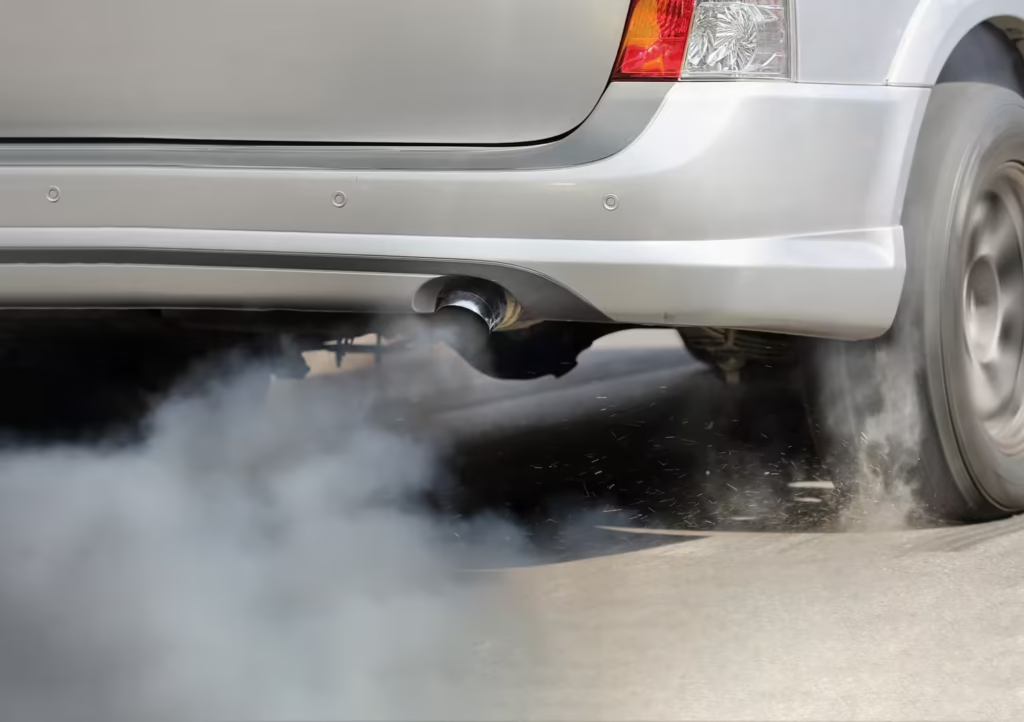
If the oil level keeps dropping but there’s no leak in sight, the engine may be burning oil internally through worn piston rings or valve seals. The smell then comes from the tailpipe rather than the engine bay, usually with bluish-gray smoke, especially on startup, and the color of your exhaust smoke helps confirm what’s going on.
Running low on oil makes every one of these problems worse. The oil that’s left has to work harder, breaks down faster in Oahu’s heat, and lets internal parts run hotter. Checking the dipstick once a month and sticking to a sensible oil change schedule is the cheapest insurance against this kind of damage. If the level drops far enough to trigger the red oil pressure light, shut the engine off as soon as it’s safe.
Burning Plastic or Electrical Smell: Don’t Ignore This One
Of all the smells on this list, a burning plastic smell in your car is the one to take most seriously, because it points straight at the electrical system. The FTC compares the smell of an electrical short to burned toast and advises against driving until the problem has been diagnosed. The source is usually melting wire insulation, a short circuit, or an overheated fuse or connector. Poorly installed aftermarket accessories, such as stereos, lights, or dash cams wired straight into the fuse box, are a common suspect. Problems like these can smolder quietly before they turn into a fire.
If the smell reminds you of burned toast or hot plastic, especially with flickering lights, blown fuses, or smoke from the dash, pull over, turn off the engine, and don’t drive until the car has been checked.
Burning Smell From the AC Vents
If the smell pours out of the vents, first check whether it changes when you switch the AC on and off. The ventilation system draws in outside air near the base of the windshield, so an oil leak or a slipping belt in the engine bay can also reach you through the vents. If the smell appears only with the AC running, the problem most likely lives in the AC system itself, and Oahu’s humidity gives it plenty of opportunities.
Musty odor from the evaporator
The AC evaporator sits deep in the dashboard and stays cold and damp, which in Oahu’s humidity makes it a magnet for mold and mildew. The result is a stale, musty smell that some drivers describe as burnt, usually strongest in the first minute after you turn the system on. A clogged cabin air filter or a blocked condensate drain makes it worse. A new filter and a professional evaporator cleaning usually solve the problem, though in a climate where humidity works against your car AC all year, the smell tends to return unless the system gets regular attention.
Overheating blower motor or AC compressor clutch
A hot, electrical smell from the vents points to a different problem. A failing blower motor can overheat and cook its own housing, often while making a whirring or grinding noise, and a fan that works only on some speeds suggests a burnt-out blower resistor. A slipping AC compressor clutch gives off a burnt, friction-type smell in the engine bay that quickly gets pulled into the cabin. Compressor work usually means opening the refrigerant circuit, which repair shops must handle with certified technicians and approved recovery equipment. Depending on the diagnosis, the fix can range from a new clutch to a full AC compressor replacement.
When a Burning Smell Means Stop Driving Now (and When to Just Book a Service)
Not every burning smell is a roadside emergency, but a few are. Use this table as a quick gut check:
Pull over, turn off the engine, and don’t drive until it’s checked
Sharp, acrid smell near a wheel
Overheated or dragging brakes
Medium to high
Stop and let the brakes cool; if the pedal feels soft, don’t drive on
Acrid smell in a manual car
Slipping or riding clutch
Medium
Take your foot off the pedal; book a check if it keeps happening
Thick, greasy oil smoke
Oil leaking onto the exhaust
Medium
Check the oil level, then drive gently to a shop
Hot rubber
Slipping belt, hose on hot metal
Medium
Drive to a shop soon and avoid long trips
Musty smell from the vents
Mold in the AC evaporator
Low
Book an AC service in the next week or two
The top rows matter most for a reason. The U.S. Fire Administration lists mechanical and electrical issues among the common causes of vehicle fires and recommends having your vehicle serviced regularly by a trained mechanic. A burning smell is often the earliest warning that regular service is meant to catch.
If you’re anywhere around Waipahu, Pearl City, or Kapolei and your car is sending you signals through your nose, don’t guess. Our team at Top Level Cars offers a professional diagnostic with transparent pricing, so you’ll know exactly what’s wrong and what it costs before any work begins. Book a visit, and save the open windows for the ocean breeze.
Burning Smell Questions We Hear at the Shop
Is it safe to drive if my car smells like something is burning?
It depends on the smell. A musty AC odor can wait for an appointment, and a belt or oil smell usually allows a careful drive to the shop. A burning plastic or electrical smell, or brakes that smell hot and feel soft, means you should pull over and stop driving.
Why does my car smell like burning rubber when I accelerate?
Acceleration puts extra load on the drive belt, so a loose or glazed serpentine belt slips harder and scorches. In a manual car, a worn clutch slipping under power gives off a similar smell, usually with engine revs climbing faster than your speed.
Can worn brake pads cause a burning smell?
Yes. Thin pads have less material to absorb heat, so they overheat faster, and once they wear down to the metal backing plate, metal grinds against the rotor. Expect a sharp, acrid smell along with squealing or grinding. Knowing how often to replace brake pads helps you get ahead of this before the rotors are damaged.
Why does my car smell like burning oil after an oil change?
This is usually a little spilled oil burning off the exhaust or engine, and it fades within a drive or two. If it lingers, a loose filter, an under-tightened drain plug, or a poorly seated gasket may be leaking and should be checked.
Can a burning plastic smell mean my car’s electrical system is failing?
Yes. Melting wire insulation, a short circuit, or an overheating fuse, connector, or blower motor can all smell like hot plastic. Because these problems can smolder and spread, have the electrical system inspected right away.
Why does my car AC smell like burning when I turn it on?
Most often it’s mold and moisture buildup on the damp evaporator, which is common in humid Oahu weather. A sharper, hotter smell can mean the blower motor or compressor clutch is overheating and needs professional attention.
Read what our satisfied customers have to say about our services.
Great experience. I brought my Prius in for a diagnostic on a dash board error light. Plus I knew that the rear bearings needed to be replaced.
Their attentive behavior was immediate as I scheduled my Monday morning shop visit and the owner responded on a Sunday to schedule.
Even though there was a diagnostic fee the amount was applied to the repair.
In and out in the time committed on the estimate. Clean, very clean facilities from to the waiting room and throughout the shop.
I will continue to use them for future Maintinance and repair’s.
Robert G.
I recently had my Honda serviced at Top Level Cars, and I couldn't be more pleased with the experience. From the moment I walked in, the staff was incredibly welcoming and professional. They took the time to listen to my concerns and provided a detailed explanation of the necessary repairs.
The quality of the work was outstanding. My Honda now runs smoother than ever, and I have complete confidence in the repairs they performed. The technicians clearly know their craft, and their attention to detail was evident in the final result.
What stood out the most was the transparency throughout the entire process. I was kept informed of the progress and costs at every step, ensuring there were no surprises when it came time to settle the bill. The prices were fair and competitive, especially considering the high level of service provided.
Overall, Top Level Cars exceeded my expectations. I highly recommend them to anyone in need of reliable and trustworthy auto service. I will definitely be returning for all my future car maintenance and repair needs.
Denis G.
First impressions: EXCELLENT! We have a Mercedes ML430 that needs some work on. Nick responded immediately and gave us a fair price, the best one we could find on the island. After checking, he recommended only one of the four repairs that others pushed for, and even that with no hurry whatsoever. In fact we felt so well treated by him that we didn’t mind doing his recommended work on our first visit, because we want the good service at TopLevel Cars recognized and paid for. We will definitely return!
Mark M.
If you have car trouble go to Top Level Cars and ask for Demetri! The service was incredible and the cost is the BEST on the island. He was able to take my car in and have it done the same day! He is super knowledgeable and was patient when explaining the work my car needed. I will 100% be bringing my car back for any future services.
Jennifer M.
Top Level Cars are true professionals when it comes to auto repair. I have a Mercedes CL550 that needed servicing. They took me in right away and did an excellent job. I recommend Top Level Cars to anyone who values outstanding service and fair prices. I will only trust Top Level Cars with my car repairs.
Gus N.
The Customer Service here is top notch! Shout out to a great team!! They were the first ones to get back to me and help me with my Tire issue. I have secured my appointment and will be back to have more services done.
Kristina J.
Top Level Cars provided an outstanding experience from start to finish. Their pricing was fair and transparent, exactly as advertised with no surprises. Communication was exceptional; they promptly answered all my questions and kept me informed throughout the process. The service was incredibly fast—I was in and out in no time. They made the entire process smooth and hassle-free. I highly recommend Top Level Cars to anyone looking for a reliable and trustworthy auto repair shop.



 Tips