Spongy Brake Pedal: Why Your Brakes Feel Soft and When It’s Dangerous
Top Level Cars
10 min read
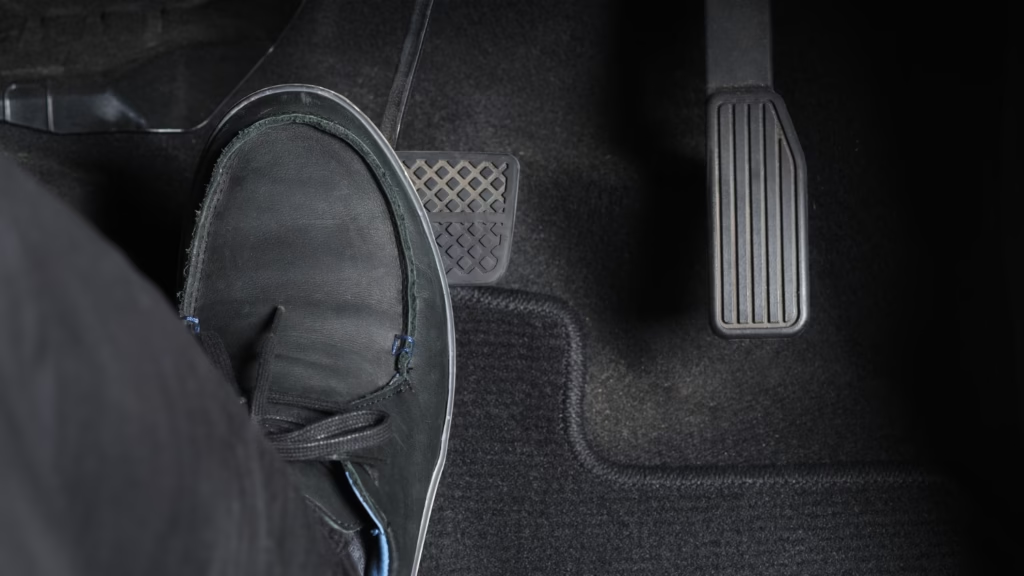
Most brake problems announce themselves out loud. Worn pads start to squeal, uneven rotors send a shudder through the steering wheel, and metal-on-metal grinding is hard to miss even with the radio on. A spongy pedal gives you none of that. The only clue sits under your right foot: the pedal travels a little deeper than it used to, feels mushy at the top of its stroke, or firms up only after a second press. Because the change creeps in over weeks, many drivers simply get used to it.
That habit is worth breaking. A soft pedal is one of the few brake symptoms that shows up while the car can still stop, which gives you a window to fix a hydraulic problem on your own schedule instead of discovering it at the bottom of a hill.
What Causes a Spongy Brake Pedal?
Your brakes are hydraulic. When you press the pedal, the master cylinder pushes brake fluid through the lines, and that fluid forces the pads against the rotors at each wheel. The whole system relies on one simple fact: brake fluid can’t be compressed, but air and vapor can. Anything that puts air or vapor into the lines, lets fluid escape, or lets pressure slip past a worn seal turns firm pedal travel into sponginess.
Air in the brake lines
When the lines hold nothing but fluid, every bit of pedal force reaches the calipers. Once air bubbles get in, your foot has to squeeze those bubbles first, and that extra give is the sponginess you feel.
Air usually enters in one of two ways. Either the system was opened during a repair, such as a caliper or brake line replacement, and wasn’t bled thoroughly afterward, or the fluid level dropped so low that the master cylinder drew in air along with the fluid.
Old or moisture-contaminated brake fluid
Brake fluid is hygroscopic: it soaks up water from the air, a bit like a towel left out on the lanai. Moisture works its way in through rubber hoses, seals, and the reservoir cap, and Hawaii’s year-round humidity gives it plenty to work with. The more water the fluid holds, the lower its boiling point drops.
The federal brake fluid standard, FMVSS No. 116, sets minimum boiling points for fluid both “dry” (fresh) and “wet” (after it has absorbed moisture in a standardized lab test):
Fluid type
Minimum dry boiling point
Minimum wet boiling point
DOT 3
401°F (205°C)
284°F (140°C)
DOT 4
446°F (230°C)
311°F (155°C)
That drop of more than 100°F matters under hard braking. Brakes turn motion into heat, some of that heat reaches the fluid in the calipers, and when wet fluid hits its boiling point it forms vapor bubbles. Vapor compresses just like air, so the pedal goes soft exactly when you’re asking the most of your brakes. Sticking to a sensible brake fluid change interval keeps the moisture content low and the boiling point safely high.
Brake fluid leak
Of all the causes, a leak is the one you can sometimes spot on your own. Watch for these signs:
A damp spot or small puddle near a wheel or under the engine bay. Fresh brake fluid is clear to pale yellow and darkens to amber or brown with age. It feels slick to the touch.
A reservoir level that keeps dropping even after you top it off.
A red brake warning light on the dashboard, which on most cars comes on when the fluid level gets low.
A leak lets pressure escape, so the pedal has less and less to push against. On Oahu, a common source is a steel brake line that salt air has corroded until it starts to weep, usually in a spot you’d never see without a lift. Other leaks leave no trace on the ground at all: a master cylinder can leak internally or into the brake booster, lowering the fluid level with nothing dripping underneath. If you suspect a leak, stop driving. Topping up only buys time, while a proper brake system repair finds the leaking line, hose, or seal and replaces it.
Sometimes the fluid is fresh and nothing leaks on the outside, yet the pedal still sinks slowly under steady pressure. That pattern usually points to the master cylinder. When its internal seals wear, fluid slips past them instead of building pressure, so the pedal drifts toward the floor while you wait at a stoplight.
Aging rubber brake hoses can cause a similar soft feel. As the hose walls weaken, they balloon slightly under pressure and soak up some of the force that should reach the calipers. On cars with rear drum brakes, shoes that have worn out of adjustment add to the problem by making the pedal travel farther before the brakes engage.
None of these faults respond to pumping or topping off. Telling them apart takes a hands-on inspection with the car on a lift.
Is It Safe to Drive With a Soft Brake Pedal?
It depends on how soft the pedal is. If it feels slightly spongy but still stops the car firmly when you press harder, you can usually drive gently and directly to a shop. Leave extra following distance and avoid steep roads on the way.
Some symptoms rule out driving altogether:
The pedal sinks to or near the floor.
The pedal keeps dropping while you hold steady pressure.
You have to pump the pedal to get the brakes to work.
The red brake warning light is on together with the soft pedal.
You see or smell fluid near a wheel or under the car.
If the pedal sinks toward the floor or only works after pumping, don’t drive the car. Call for a tow.
Modern cars split the hydraulic system into two separate circuits, so a single failure rarely takes away all braking at once. What remains, though, is a pedal that drops far and stopping distances that can grow sharply, and that’s a margin nobody should test in traffic.
How to Diagnose a Spongy Brake Pedal
Start by making sure you’re dealing with a soft pedal at all. Every car has its own pedal feel, so the most useful signal is change: a pedal that feels softer or sits lower than it did a few months ago deserves attention, even if it still stops the car. A pedal that is hard and barely moves usually points to the brake booster or its vacuum supply instead. A firm pedal that needs extra effort while the car coasts farther than it should is a classic sign of glazed brake pads.
If yours sinks and feels soft, you can run a quick check in your own driveway, though pinpointing the exact cause takes shop equipment.
Simple at-home pedal test
This test takes about a minute and needs no tools. Treat the result as a first clue rather than a diagnosis.
Park on level ground, set the parking brake, and turn the engine off.
Press the brake pedal firmly several times to use up the vacuum stored in the brake booster.
Now hold steady, firm pressure on the pedal with the engine still off.
Watch what the pedal does. A healthy pedal firms up and stays put. If it keeps sinking slowly under your foot, suspect an internal leak, often in the master cylinder. If it feels springy or needs pumping, air or old fluid is the likely culprit.
Keep holding the pedal and start the engine. The pedal should dip slightly as the booster kicks in. If it doesn’t move at all, the booster may need a look as well.
The test tells you that something is wrong, though it won’t tell you exactly what or how urgent it is. Leave that call to a technician.
A proper inspection goes well beyond a pedal push. We pressure-test the hydraulic system to find where pressure is lost, check every line, hose, and caliper for leaks or corrosion, and test the fluid itself for moisture content or boiling point.
If a warning light is on, ABS light diagnostics belong in the same visit. Low fluid can trigger the brake and ABS warnings together, and air trapped inside the ABS hydraulic unit is a known reason a pedal stays soft even after a standard bleed.
How a Spongy Brake Pedal Gets Fixed
The right repair depends entirely on the cause, which is why diagnosis always comes first. Topping off fluid or bleeding the brakes can make the pedal feel better for a few days while the real problem keeps developing underneath.
Cause
Typical sign
Usual fix
Air in the lines
Soft pedal that firms up with pumping
Bleeding the brakes, on some cars with a scan tool that cycles the ABS pump
Old, moisture-laden fluid
Pedal goes soft after hard or repeated braking
Complete brake fluid flush
External leak
Dropping fluid level, wet spots, warning light
Replacing the leaking line, hose, or caliper seal, then bleeding the system
Failing master cylinder
Pedal slowly sinks under steady pressure
Master cylinder replacement and bleeding
Swollen rubber hoses
Soft pedal with fresh fluid and no visible leak
Hose replacement and bleeding
Any repair that opens the hydraulic system ends with a thorough bleed, and fresh fluid is the cheapest insurance against the problem coming back. A brake fluid flush replaces all of the old fluid, bringing the boiling point back to where the manufacturer intended.
If any of the do-not-drive symptoms above sound familiar, call for a tow and let us take it from there. If the pedal has only gone a little soft, book a brake diagnostic at Top Level Cars in Waipahu within the next few days, and you’ll know exactly what your brakes need before any work begins.
Before You Drive on a Soft Pedal: Common Questions
Can low brake fluid cause a spongy brake pedal?
Yes. A low level lets the master cylinder draw in air, and compressible air is exactly what makes the pedal feel soft. The level also drops slowly as pads wear down, but a level that falls quickly usually means a leak, so topping it off without finding the cause only hides the problem.
How do I know if it’s air in the lines or a bigger brake problem?
A pedal that firms up after a few pumps often points to air. A pedal that sinks under steady pressure and won’t hold suggests a failing master cylinder or a leak. A pressure test and a fluid check in the shop give you the definitive answer.
Why does my brake pedal feel soft only sometimes?
Intermittent sponginess often appears after heavy or repeated braking, for example on a long downhill stretch. Moisture-laden fluid boils, the vapor makes the pedal soft, and once everything cools down the pedal firms up again. That pattern is an early warning that the fluid is due for replacement.
Why does my brake pedal go to the floor?
A pedal that travels all the way down usually means a major loss of hydraulic pressure caused by a significant leak or a failed master cylinder. Don’t drive the car. Have it towed in for inspection.
Will spongy brakes fix themselves?
No. Air, wet fluid, leaks, and worn seals don’t repair themselves, and each of them tends to get worse over time. Without a repair, a soft pedal only moves in one direction.
Topping off hides the symptom without explaining why the level dropped. Bleeding done in the wrong order, or on a car whose ABS unit needs a scan tool to purge, can leave air in the system or even add more. If the real issue is a leak or a failing master cylinder, neither step helps, and you lose time you could have spent on the actual fix.
Read what our satisfied customers have to say about our services.
Great experience. I brought my Prius in for a diagnostic on a dash board error light. Plus I knew that the rear bearings needed to be replaced.
Their attentive behavior was immediate as I scheduled my Monday morning shop visit and the owner responded on a Sunday to schedule.
Even though there was a diagnostic fee the amount was applied to the repair.
In and out in the time committed on the estimate. Clean, very clean facilities from to the waiting room and throughout the shop.
I will continue to use them for future Maintinance and repair’s.
Robert G.
I recently had my Honda serviced at Top Level Cars, and I couldn't be more pleased with the experience. From the moment I walked in, the staff was incredibly welcoming and professional. They took the time to listen to my concerns and provided a detailed explanation of the necessary repairs.
The quality of the work was outstanding. My Honda now runs smoother than ever, and I have complete confidence in the repairs they performed. The technicians clearly know their craft, and their attention to detail was evident in the final result.
What stood out the most was the transparency throughout the entire process. I was kept informed of the progress and costs at every step, ensuring there were no surprises when it came time to settle the bill. The prices were fair and competitive, especially considering the high level of service provided.
Overall, Top Level Cars exceeded my expectations. I highly recommend them to anyone in need of reliable and trustworthy auto service. I will definitely be returning for all my future car maintenance and repair needs.
Denis G.
First impressions: EXCELLENT! We have a Mercedes ML430 that needs some work on. Nick responded immediately and gave us a fair price, the best one we could find on the island. After checking, he recommended only one of the four repairs that others pushed for, and even that with no hurry whatsoever. In fact we felt so well treated by him that we didn’t mind doing his recommended work on our first visit, because we want the good service at TopLevel Cars recognized and paid for. We will definitely return!
Mark M.
If you have car trouble go to Top Level Cars and ask for Demetri! The service was incredible and the cost is the BEST on the island. He was able to take my car in and have it done the same day! He is super knowledgeable and was patient when explaining the work my car needed. I will 100% be bringing my car back for any future services.
Jennifer M.
Top Level Cars are true professionals when it comes to auto repair. I have a Mercedes CL550 that needed servicing. They took me in right away and did an excellent job. I recommend Top Level Cars to anyone who values outstanding service and fair prices. I will only trust Top Level Cars with my car repairs.
Gus N.
The Customer Service here is top notch! Shout out to a great team!! They were the first ones to get back to me and help me with my Tire issue. I have secured my appointment and will be back to have more services done.
Kristina J.
Top Level Cars provided an outstanding experience from start to finish. Their pricing was fair and transparent, exactly as advertised with no surprises. Communication was exceptional; they promptly answered all my questions and kept me informed throughout the process. The service was incredibly fast—I was in and out in no time. They made the entire process smooth and hassle-free. I highly recommend Top Level Cars to anyone looking for a reliable and trustworthy auto repair shop.



 Brakes