You’re creeping along H-1, the A/C is on, the sun is cooking the dash, and then you notice the temperature gauge climbing. That moment gets your attention fast. If you’ve been asking “why is my car overheating?”, the short answer is simple: your engine is getting hotter than the cooling system can handle.
Overheating isn’t the problem itself. It’s a symptom. Like a fever, it tells you something underneath isn’t working right, and if you keep driving, the damage can get expensive fast.
What a Rising Temperature Gauge Really Means
When the temperature gauge moves toward “hot,” your engine is struggling to shed heat. A healthy cooling system carries heat away from the engine, moves it through the radiator, and keeps operating temperature in a safe range, typically 195–220°F (90–105°C).
If the needle rises above normal and stays there, don’t treat it like something that can wait. Heat can distort metal parts inside the engine, and once that happens, the repair goes well beyond a simple top-off.
Warning signs to watch for
Steam from under the hood – usually means coolant is escaping or boiling.
A sweet smell – can point to a coolant leak.
Poor A/C performance – when the engine bay overheats, cabin cooling may suffer too.
If the gauge is climbing, pay attention before the car decides for you.
The #1 Cause of Engine Overheating: Low Coolant
Most of the time, the first thing to check is coolant level. According to AAA, a faulty cooling system and low coolant are among the most common causes of engine overheating. When coolant drops too low, temperatures can climb past 250°F, risking warped cylinder heads or a blown head gasket.
What coolant actually does
Coolant (typically a 50/50 mix of water and antifreeze) is the fluid that carries heat away from the engine. Without enough of it, the system simply can’t move heat where it needs to go.
Low coolant doesn’t always mean a visible puddle under the car. It can result from small leaks, aging radiator hoses, or gradual evaporation. The car may seem fine until stop-and-go traffic or a long idle puts extra demand on the system.
How to stay on top of it
Check the reservoir when the engine is cold and look for the level mark.
Use the correct coolant type for your vehicle (OEM-spec fluid matters, especially for European makes).
Pay attention to repeat top-offs. If it keeps dropping, there’s a leak to find.
Schedule a cooling system inspection if the level is low more than once.
Don’t keep topping off coolant without finding out where it’s going. A refill helps temporarily, but it doesn’t fix the underlying issue.
Broken Parts: Thermostat and Water Pump Failures
Sometimes the coolant level is fine, but the system still can’t move heat. That usually means a component has failed.
A stuck thermostat can trap heat quickly
The thermostat is a valve that opens when the engine warms up, allowing coolant to circulate to the radiator. If it sticks closed, coolant stays trapped in the engine and temperatures can spike rapidly. This failure often feels sudden: the car starts out fine, then the gauge shoots upward much faster than expected.
The upper radiator hose feels hot while circulation seems restricted.
The car overheats more severely in traffic or on hills.
A worn water pump stops circulation
The water pump keeps coolant moving through the system. If the impeller wears out or breaks, coolant flow can drop dramatically. The engine keeps generating heat, but the system can no longer carry it away, leading to overheating quickly under load.
If your car only overheats when climbing, idling with the A/C on, or carrying extra load, the pattern matters. Intermittent overheating usually points to a circulation problem.
A thermostat or water pump issue is not a “keep driving and see what happens” situation. Shops confirm the cause by checking coolant flow, hose temperatures, pressure loss, and leaks. If you already suspect coolant loss, a coolant leak service is a direct way to narrow it down.
What to Do Right Now If Your Car Is Overheating
When the gauge climbs, act early. The goal is to protect yourself first, then protect the engine from further damage.
Steps to take, in order
Turn off the A/C. That reduces extra heat load on the engine.
Turn the heater on high. Uncomfortable, but it pulls heat away from the engine.
Pull over somewhere safe. Don’t wait for the warning to become steam.
Shut the engine off and let it cool.
Do not open the radiator cap while hot. Pressurized coolant can spray out dangerously.
Sudden vs. recurring overheating
Situation
Recommended next step
Sudden steam, strong smell, rapid temperature spike
Pull over immediately and arrange a tow
Gauge rises only in traffic or on hills
Stop, cool down, then have the system inspected before driving further
Repeats after topping off coolant
Treat it as an active fault, not a one-time event
If the car overheated hard once, don’t assume it fixed itself because the gauge came back down.
Expert Car Overheating Repair in Waipahu and Kapolei
Overheating isn’t a part-swap guessing game. One car needs a thermostat, another has a leak, and another has a circulation problem that only shows up under load. The right repair starts with finding the exact cause.
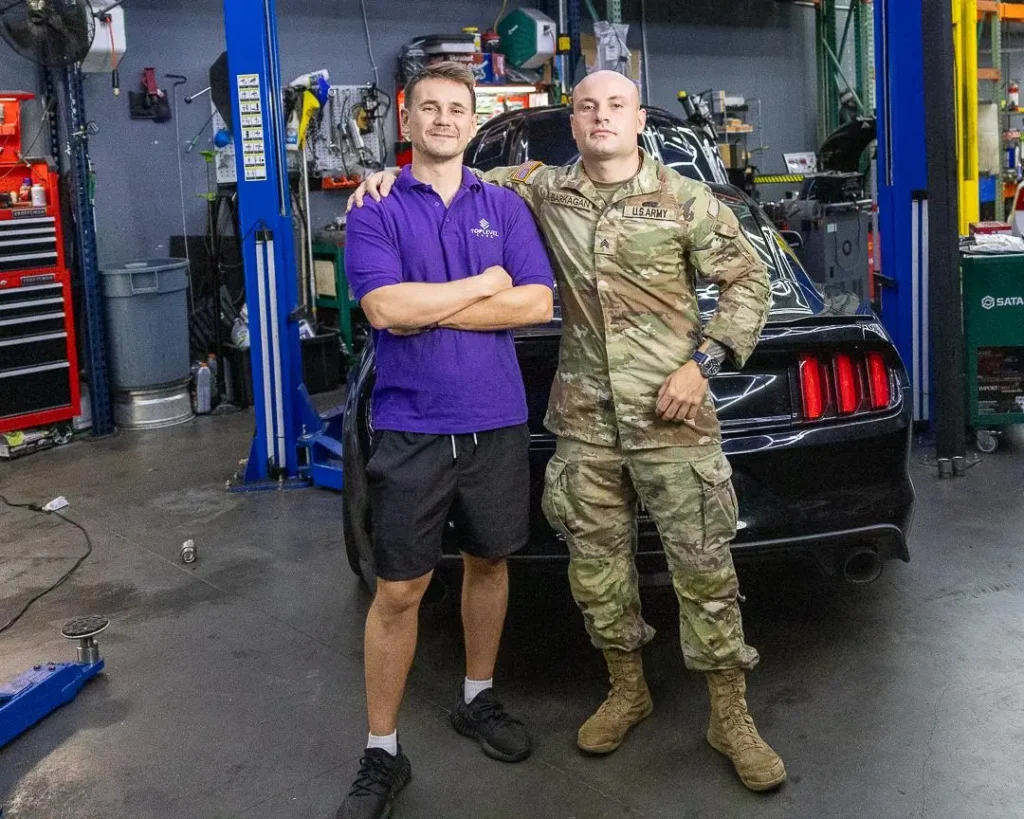
For drivers in Waipahu, Pearl City, and Kapolei, Top Level Cars handles diagnostics and repairs for European and American vehicles, including cooling system issues, engine repair, and leak checks. The shop also offers a permanent 10% labor discount for military members, along with evening and weekend priority scheduling.
If your car has been running hot in traffic, losing coolant, or acting up only during certain drives, get it checked before a minor issue turns into engine damage.
Frequently Asked Questions About Car Overheating
Can I add water if my car is overheating?
In an emergency, plain water may help temporarily after the engine cools down, but it isn’t a substitute for the correct coolant. The system should be properly flushed and refilled afterward.
Can I drive a short distance with an overheating engine?
It’s risky. Even a short drive while the engine is too hot can cause expensive internal damage, including warped heads or a blown gasket.
Why does my car overheat only in traffic?
Slow-moving or stationary traffic reduces airflow through the radiator right when the engine needs cooling most. This often points to low coolant, a weak water pump, or another circulation issue.
If the temperature returns to normal, am I safe to keep driving?
Not necessarily. Intermittent overheating still means something is wrong, and it will likely return when conditions get worse.
Read what our satisfied customers have to say about our services.
Great experience. I brought my Prius in for a diagnostic on a dash board error light. Plus I knew that the rear bearings needed to be replaced.
Their attentive behavior was immediate as I scheduled my Monday morning shop visit and the owner responded on a Sunday to schedule.
Even though there was a diagnostic fee the amount was applied to the repair.
In and out in the time committed on the estimate. Clean, very clean facilities from to the waiting room and throughout the shop.
I will continue to use them for future Maintinance and repair’s.
Robert G.
I recently had my Honda serviced at Top Level Cars, and I couldn't be more pleased with the experience. From the moment I walked in, the staff was incredibly welcoming and professional. They took the time to listen to my concerns and provided a detailed explanation of the necessary repairs.
The quality of the work was outstanding. My Honda now runs smoother than ever, and I have complete confidence in the repairs they performed. The technicians clearly know their craft, and their attention to detail was evident in the final result.
What stood out the most was the transparency throughout the entire process. I was kept informed of the progress and costs at every step, ensuring there were no surprises when it came time to settle the bill. The prices were fair and competitive, especially considering the high level of service provided.
Overall, Top Level Cars exceeded my expectations. I highly recommend them to anyone in need of reliable and trustworthy auto service. I will definitely be returning for all my future car maintenance and repair needs.
Denis G.
First impressions: EXCELLENT! We have a Mercedes ML430 that needs some work on. Nick responded immediately and gave us a fair price, the best one we could find on the island. After checking, he recommended only one of the four repairs that others pushed for, and even that with no hurry whatsoever. In fact we felt so well treated by him that we didn’t mind doing his recommended work on our first visit, because we want the good service at TopLevel Cars recognized and paid for. We will definitely return!
Mark M.
If you have car trouble go to Top Level Cars and ask for Demetri! The service was incredible and the cost is the BEST on the island. He was able to take my car in and have it done the same day! He is super knowledgeable and was patient when explaining the work my car needed. I will 100% be bringing my car back for any future services.
Jennifer M.
Top Level Cars are true professionals when it comes to auto repair. I have a Mercedes CL550 that needed servicing. They took me in right away and did an excellent job. I recommend Top Level Cars to anyone who values outstanding service and fair prices. I will only trust Top Level Cars with my car repairs.
Gus N.
The Customer Service here is top notch! Shout out to a great team!! They were the first ones to get back to me and help me with my Tire issue. I have secured my appointment and will be back to have more services done.
Kristina J.
Top Level Cars provided an outstanding experience from start to finish. Their pricing was fair and transparent, exactly as advertised with no surprises. Communication was exceptional; they promptly answered all my questions and kept me informed throughout the process. The service was incredibly fast—I was in and out in no time. They made the entire process smooth and hassle-free. I highly recommend Top Level Cars to anyone looking for a reliable and trustworthy auto repair shop.


 Engine