The Ultimate Car Maintenance Checklist for Hawaii’s Roads and Weather
Top Level Cars
16 min read
Hawaii is hard on vehicles in its own way. Salt air works on metal and electrical connections. Heat and humidity wear down fluids, rubber, and batteries. Stop-and-go H-1 traffic and short trips around Oahu mean many cars never get the steady driving that is easier on parts. A generic checklist gets the basics right, but it does not account for how fast local conditions speed certain problems up.
At Top Level Cars in Waipahu, we see the same pattern every week. A car comes in for something small: a weak battery, low fluid, or uneven tire wear, and there is usually a Hawaii-specific reason behind it. Staying on top of routine car maintenance saves money, and it helps you catch the kind of wear that shows up sooner here than it would on the mainland.
1. Oil and Filter Changes
Engine oil does more than lubricate. It carries heat away, keeps internal parts clean, and protects metal when the engine works hard in traffic or on hills. Heat, humidity, and repeated short trips wear it down fast, because there is not enough long, steady driving to burn off moisture and fuel dilution.
Always use the oil grade and specification listed in your owner’s manual. That matters most on European cars, which often require specific approvals, but it also applies to daily drivers, family SUVs, and work trucks. The wrong oil can cause noisy starts, higher oil consumption, or extra wear over time. Service interval is where local driving matters: if you mostly do short trips, heavy traffic, or uphill routes, the manual schedule may be too optimistic.
A few habits catch trouble early:
Check the oil level about once a month. Older engines and hot weather can lead to gradual oil loss between services.
Change the filter with the oil. A dirty filter sends contaminated oil back through the engine.
Look at the old oil. A burnt smell, heavy dark sludge, or a metallic sparkle tells a different story than normal used oil.
Keep your service records. They help with resale, warranty questions, and spotting changes in oil consumption.
One shop rule we stand by: oil changes are cheap, and engine repairs are not.
2. Tire Rotation, Inspection, and Replacement
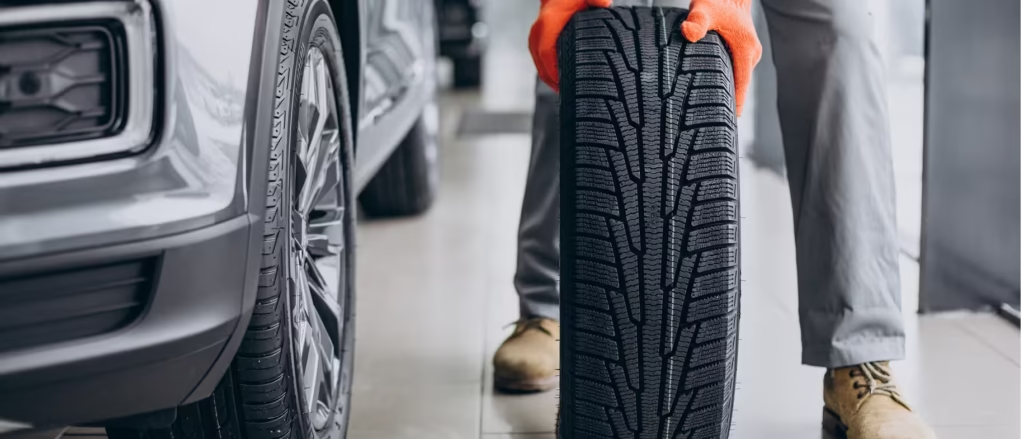
Around Oahu, heat, rough pavement, stop-and-go traffic, steep grades, and salt air all work on tires at once, so small wear problems show up sooner than drivers expect. Rotate on the schedule in your owner’s manual, or sooner if your driving is mostly town miles, heavy traffic, or repeated hill routes. Rotation spreads the wear around, but it does not fix the cause. If one shoulder wears faster, or the tread feels chopped and noisy, check alignment, suspension, and tire pressure before you burn through another set.
Do a quick inspection about once a month when the tires are cold. Look across the full tread width, check the sidewalls for cuts or bulges, and match pressures to the door-jamb sticker, not the number on the tire sidewall. Underinflation is common here because drivers go by feel, and hot days can hide a tire that is already wearing wrong.
A few things matter more here than in a generic maintenance guide:
Watch for outer-edge wear. That often points to low pressure or alignment trouble.
Check for cracking and dry rot. Salt air, sun, and parked-outside vehicles age rubber faster.
Take rain traction seriously. Worn tread shows up fast during a sudden shower or on a slick road.
Don’t ignore vibration or shaking. Uneven tires can feel like brake or suspension trouble. Our guide on why your car shakes when braking can help you narrow it down.
Replace tires based on tread depth, age, and wear pattern, not just whether they still hold air. On lower-profile European tires, pothole and curb damage is easy to miss. On trucks, vans, and SUVs carrying tools or gear, load and heat wear tires in a different pattern than a light commuter car. Catching that early is cheaper, because a rotation and alignment check cost far less than four tires you did not plan for.
3. Brake System Inspection and Service
Brakes tell you when they are unhappy: squealing, grinding, pedal vibration, a soft pedal, or longer stopping distance. Around Oahu, constant traffic and downhill braking wear parts fast. Brake fluid gets overlooked too. In Hawaii’s humid air, moisture contamination is a real concern, and it can affect pedal feel and braking consistency.
Waiting until the brakes make metal-on-metal noise does not save money. It usually turns a pad job into pads and rotors, and sometimes more if the heat damages other parts.
Look out for these signs:
Squeal at low speed. Pads may be getting thin.
Shake while braking. Rotors may be uneven, or suspension issues may be adding to it.
Soft pedal. Fluid condition or air in the system needs attention.
4. Air Conditioning System Service
You feel this one fast in Hawaii. Park in the sun for an hour, get back in, and a weak A/C stops being a small annoyance. Our climate is hard on A/C parts: heat keeps the system working longer, humidity adds strain, and salt air speeds up corrosion on fittings near the condenser. Add vog and dust, and the system has to move cleaner air through a filter that clogs sooner than expected.
A common local pattern is cold air while driving, then warmer air sitting in traffic. That can point to weak condenser airflow, a cooling fan problem, low refrigerant, or early compressor wear. A musty smell usually means moisture is hanging around in the evaporator box or the cabin filter is dirty.
Small A/C issues get more expensive if they sit through a Hawaii summer:
Air gets cold only at speed. Have the fan, refrigerant charge, and condenser checked.
Airflow is weak on high fan. The cabin filter may be loaded with dust, pollen, and moisture.
Cabin smells damp or sour. Mold and bacteria build up when humidity stays trapped in the system.
You keep topping off refrigerant. Refrigerant is not used up like gas or oil. A low system usually has a leak that needs to be found and repaired.
Run the A/C regularly, even when you do not need maximum cooling. It keeps seals lubricated and lets you catch changes before the compressor is damaged.
5. Battery Testing and Replacement
Battery trouble in Hawaii rarely happens all at once. The car cranks a little slower each week until the day it quits. Our heat shortens battery life, and salt air, humidity, short trips, and stop-and-go traffic beat up terminals and cable ends too. Cars parked near the coast show corrosion sooner than inland vehicles, and cars that sit for long stretches lose charge faster, especially with alarms or cameras staying active.
Test the battery once it is a few years old, and sooner if the car has been slow to crank or needed a jump. Test the charging system at the same time, because a weak alternator, poor connection, or parasitic draw can look like a bad battery at first.
Watch for these signs:
Slow cranking. The engine sounds lazy or labored when you start it.
Lights flicker or dim. Headlights, interior lights, or the dash may change brightness.
Warning messages come and go. Low voltage can trigger odd electrical complaints.
Corrosion around the posts. White, blue, or green buildup adds resistance and hurts charging.
A swollen or cracked battery case. Heat damage can show up on the outside.
Many newer vehicles, especially European models and cars with start-stop systems, need the correct battery type and a registration procedure after installation. Put in the wrong battery, and charging problems or warning lights can follow.
Keep the terminals clean and tight, make sure the battery is held down securely, and have repeated jump-starts diagnosed, since that usually means more than an old battery. If a battery tests weak, replace it before it strands you and you pay for a tow on top of the part.
6. Fluid Level Checks and Top-Ups
A lot of cars roll into the shop with a “weird” problem that turns out to be a fluid issue: a temp gauge creeping up, steering noise in a parking lot, harsh shifting, or changing brake-pedal feel. Heat cooks fluids faster, humidity adds moisture where you do not want it, and salt air and stop-and-go driving help small leaks show up sooner.
Use the right fluid, and use it in the right place. That sounds basic, but it causes expensive mistakes. European cars often need specific coolant and brake fluid specs, and transmission fluid is even less forgiving. The wrong fluid can create shifting problems, cooling system damage, or seal issues that cost far more than the top-up you were trying to save.
A few checks go a long way:
Coolant should look clean and sit at the proper level. If it looks rusty, muddy, or oily, get it checked.
Brake fluid should stay sealed and clean. Moisture contamination builds over time in humid air and reduces braking performance.
Power steering fluid only applies to hydraulic systems. Many newer vehicles use electric assist and have no reservoir to top off.
Washer fluid matters here too. Salt film, red dirt, and sudden showers can ruin visibility fast.
Any fluid that keeps getting low needs diagnosis. A healthy car does not consume most fluids regularly.
Check levels on level ground and follow the carmaker’s procedure. Some fluids are checked cold, some warm, and some late-model transmissions have no dipstick at all.
If you are adding the same fluid over and over, you are not maintaining the car, you are delaying a repair.
7. Suspension and Steering Inspection
Oahu roads can be smooth one minute and rough the next. Potholes, driveway angles, traffic islands, steep ramps, and loaded-up family driving all stress suspension and steering parts. Humidity, salt exposure, and rough roads speed up wear on bushings, mounts, and joints. You may first notice it as a clunk over bumps or a floating feeling on the freeway.
Suspension problems rarely announce themselves with one dramatic failure. Usually it is a set of smaller clues:
Clunking over bumps. Often points to worn links, joints, or mounts.
The vehicle pulls or wanders. Steering or alignment may be off.
Uneven tire wear. Suspension wear and tire wear often show up together.
On luxury European cars, suspension systems can be more complex, so guessing wastes time. On trucks and SUVs, worn parts can hide until they start chewing through tires.
8. Electrical System and Battery Cable Inspection
Heat, humidity, salt air, and short-trip driving are hard on electrical parts. Battery terminals build up corrosion faster near the coast, and cable ends do not need to look terrible to cause problems. A connection that is only a little loose or dirty can lead to hard starts, dim lights, charging trouble, and strange electronic faults. European vehicles can be especially sensitive to low voltage, where one weak connection triggers several warning lights at once.
A routine inspection does not take long, but it saves a lot of guesswork later:
Inspect battery terminals and cables. Look for white or green corrosion, loose clamps, frayed ends, or cracked insulation.
Watch for voltage-related symptoms. Slow cranking, flickering lights, power-window hesitation, and random warning messages often show up early.
Test all exterior lights. Brake lights, turn signals, reverse lights, and plate lights get missed all the time.
Check charging performance if the battery keeps going low. The battery may be fine while the alternator struggles to keep up in traffic with the A/C running.
If the battery is new but the car still struggles to start, the charging side needs attention. These signs of a failing alternator can help you tell the difference before you get stranded. Catch corrosion early, clean the connections, and replace damaged cables before they leave you with a car that will not crank.
9. Engine and Cabin Air Filter Replacement
In Hawaii, filters get dirty faster than the average maintenance schedule suggests. The cabin air filter catches dust, pollen, road grime, and vog before it reaches the vents. The engine air filter protects the motor from dirt and debris kicked up on shoulder roads, job sites, and drier leeward areas. Salt air and humidity do not clog a filter by themselves, but they add to the sticky film that helps fine dirt hang on.
Check filters by symptoms, not just the calendar. A musty A/C smell, weaker airflow at the vents, or more dust in the cabin usually points to the cabin filter first. For the engine air filter, look for an element that is dark, packed with debris, or starting to deform from moisture. Short trips, beach gear, open windows, construction routes, and parking under trees all shorten filter life. Fresh filters help the A/C blow cleaner air and let the engine get the airflow it was designed for. It is a small service, but in Oahu conditions you usually notice the difference fast.
10. Transmission Fluid Service and Drivetrain Inspection
A late gear engagement followed by a small bump is easy to brush off because the car still drives. It is also how small transmission problems turn into expensive ones. Heat, stop-and-go traffic, steep grades, and heavy loads all work transmission fluid harder here, and salt air and humidity under the vehicle mean the drivetrain needs regular eyes on it.
Some vehicles have a dipstick. Many newer ones do not, so level and condition must be checked with the correct procedure. The wrong fluid, the wrong fill level, or a universal substitute can create shift problems fast, especially in CVTs and many European models.
Watch for these signs:
Rough or delayed shifting. Get it checked early while it is still easy to diagnose.
Burnt smell or dark fluid. Heat breaks fluid down, and Hawaii driving speeds that up.
Clunks, vibration, or grease near the wheels. Those can point to CV axle or joint trouble, not just the transmission.
Leaks around seals, pans, or axle areas. Small leaks turn into low-fluid damage if they sit.
Drivetrain inspection matters as much as fluid service. Torn CV boots, axle-seal seepage, worn mounts, and loose driveline hardware can all cause vibration or knocking, especially on older vehicles that see rough pavement.
Treat “lifetime fluid” claims with some skepticism here. In ideal conditions, maybe. In Hawaii, the fluid deals with heat soak, traffic, hills, and salty air, and a shorter service interval often costs far less than a rebuild.
10-Point Car Maintenance Checklist Comparison
Service
Implementation complexity
Resource requirements
Expected outcomes
Ideal use cases
Key advantages
Oil and filter changes
Low, routine service, simple procedure
Motor oil (specific grade), filter, waste-oil disposal
Why a Hawaii-Specific Car Maintenance Service Makes the Difference
A normal Oahu day puts everything on the car at once: stop-and-go traffic, a hot parking lot, then a run toward the North Shore with salt air, hills, and trade winds. That is why car maintenance here needs a little more attention than the owner’s manual usually suggests. Heat shortens battery life. Humidity and salt air speed up corrosion. Traffic, steep grades, and long idling load up brakes, cooling systems, and transmissions. Vog and dust cut down airflow through filters and the A/C.
The best car maintenance tips stay simple: keep up with the basics, fix small problems early, and pay extra attention to the parts Hawaii wears out faster. The payoff is fewer surprises, fewer tow bills, and a car that feels the same in town as it does on a weekend drive out of Haleiwa.
At Top Level Cars, we work on the vehicles people depend on around Waipahu, Pearl City, and Kapolei: European sedans, American trucks, family SUVs, and daily commuters. The goal is straight answers, quality parts, and service that makes sense for local driving, not a generic mainland schedule. Ready to have your car checked by a car maintenance shop that understands Oahu conditions? Book your service online or give us a call. Service members can also ask about our permanent 10% military discount on labor.
Frequently Asked Questions About Car Maintenance
How often should I check my car in Hawaii?
A quick monthly check is a good habit for oil, coolant, tire pressure, lights, and battery condition. Hawaii’s heat, humidity, and salt air make regular walk-around checks more useful than most drivers expect.
What car maintenance item gets skipped the most?
Tire rotations, fluid checks, battery inspections, and cabin filters. They seem minor until they create uneven tire wear, overheating, no-start issues, or weak A/C performance.
Is it safe to wait if my check engine light comes on?
Not always. Some causes are minor, but the light can also point to issues that get worse if you keep driving, so it is best to have it diagnosed soon.
Do European and American cars need different maintenance?
Yes. The checklist is similar at a high level, but fluid specs, oil requirements, diagnostic needs, and common failure points can be very different depending on the make and model.
Read what our satisfied customers have to say about our services.
Great experience. I brought my Prius in for a diagnostic on a dash board error light. Plus I knew that the rear bearings needed to be replaced.
Their attentive behavior was immediate as I scheduled my Monday morning shop visit and the owner responded on a Sunday to schedule.
Even though there was a diagnostic fee the amount was applied to the repair.
In and out in the time committed on the estimate. Clean, very clean facilities from to the waiting room and throughout the shop.
I will continue to use them for future Maintinance and repair’s.
Robert G.
I recently had my Honda serviced at Top Level Cars, and I couldn't be more pleased with the experience. From the moment I walked in, the staff was incredibly welcoming and professional. They took the time to listen to my concerns and provided a detailed explanation of the necessary repairs.
The quality of the work was outstanding. My Honda now runs smoother than ever, and I have complete confidence in the repairs they performed. The technicians clearly know their craft, and their attention to detail was evident in the final result.
What stood out the most was the transparency throughout the entire process. I was kept informed of the progress and costs at every step, ensuring there were no surprises when it came time to settle the bill. The prices were fair and competitive, especially considering the high level of service provided.
Overall, Top Level Cars exceeded my expectations. I highly recommend them to anyone in need of reliable and trustworthy auto service. I will definitely be returning for all my future car maintenance and repair needs.
Denis G.
First impressions: EXCELLENT! We have a Mercedes ML430 that needs some work on. Nick responded immediately and gave us a fair price, the best one we could find on the island. After checking, he recommended only one of the four repairs that others pushed for, and even that with no hurry whatsoever. In fact we felt so well treated by him that we didn’t mind doing his recommended work on our first visit, because we want the good service at TopLevel Cars recognized and paid for. We will definitely return!
Mark M.
If you have car trouble go to Top Level Cars and ask for Demetri! The service was incredible and the cost is the BEST on the island. He was able to take my car in and have it done the same day! He is super knowledgeable and was patient when explaining the work my car needed. I will 100% be bringing my car back for any future services.
Jennifer M.
Top Level Cars are true professionals when it comes to auto repair. I have a Mercedes CL550 that needed servicing. They took me in right away and did an excellent job. I recommend Top Level Cars to anyone who values outstanding service and fair prices. I will only trust Top Level Cars with my car repairs.
Gus N.
The Customer Service here is top notch! Shout out to a great team!! They were the first ones to get back to me and help me with my Tire issue. I have secured my appointment and will be back to have more services done.
Kristina J.
Top Level Cars provided an outstanding experience from start to finish. Their pricing was fair and transparent, exactly as advertised with no surprises. Communication was exceptional; they promptly answered all my questions and kept me informed throughout the process. The service was incredibly fast—I was in and out in no time. They made the entire process smooth and hassle-free. I highly recommend Top Level Cars to anyone looking for a reliable and trustworthy auto repair shop.



 Tips
Tips