Car Battery Warning Light: Is It the Battery or the Alternator?
Top Level Cars
10 min read
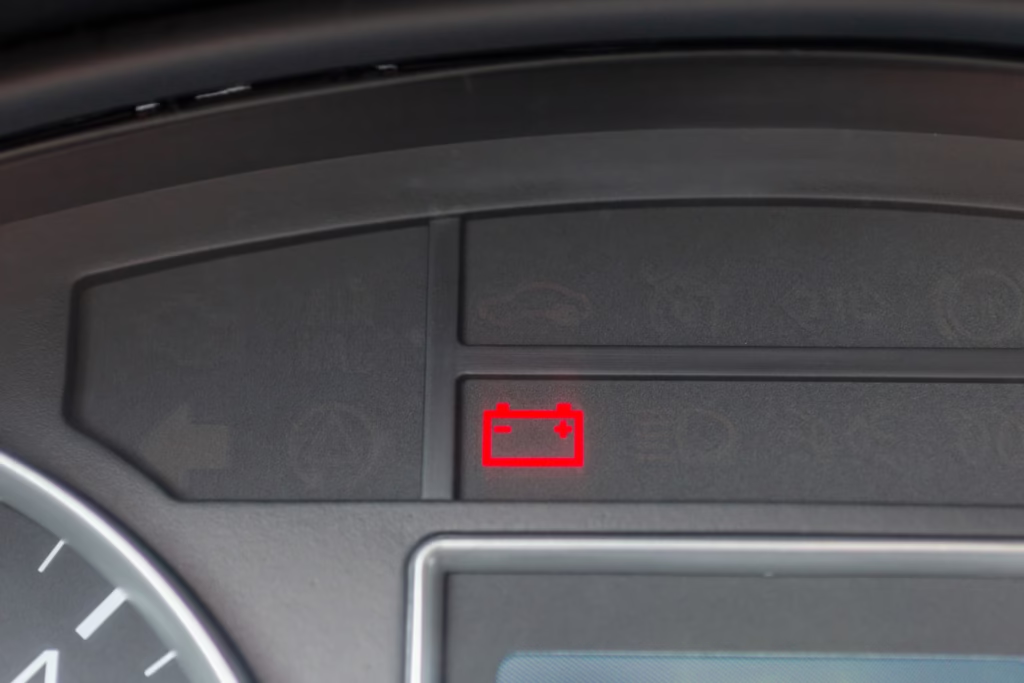
Few warning lights are as misleading as the red battery icon. It looks like it’s blaming the battery, yet the battery is only one of several parts that can switch it on. A worn alternator, a slipping drive belt, or a corroded cable can light up exactly the same symbol. It’s a familiar story at any repair shop: a driver buys a new battery, the car starts beautifully for a week, and then the light and the slow cranking come right back because the alternator was never recharging it. The light itself can’t tell the two problems apart, but the way your car behaves usually can.
What Does the Battery Warning Light Actually Mean?
When the battery light stays on, your car is reporting a fault somewhere in the charging system as a whole. The cause can be a weak battery, a failing alternator, a worn drive belt, or damaged and corroded wiring. On many newer cars the engine computer controls the alternator directly, and as Tomorrow’s Technician explains, the light can also come on when the computer loses communication with the alternator, even while it’s still charging. That’s why guessing is such a gamble.
The light should glow when you turn the key to the ON position and go out as soon as the engine starts. That’s the system checking the bulb and the circuit. A light that stays on with the engine running, or one that suddenly appears while you’re driving, is a different matter. Either one means the battery may no longer be getting recharged, and it’s time to pay attention.
Battery Light vs. Alternator Problems: How to Tell Them Apart
The battery and the alternator work as a team. The battery provides the jolt that starts your engine, and the alternator keeps the battery charged and powers everything electrical once the car is running. When one of them falters, the symptoms overlap, though not completely. The best clue is often the timing: a battery tends to act up before the engine starts, while an alternator tends to cause trouble after it’s already running.
Symptom
Most likely culprit
Slow, sluggish cranking when starting
Battery
Rapid clicking, engine won’t turn over
Battery or a loose, corroded cable
White, bluish, or green crust on the terminals
Battery terminals and cables
Dashboard and headlights dim while driving
Alternator
Engine dies after it was already running
Alternator
Squealing noise from under the hood
Drive belt or alternator pulley
Signs it’s the battery
A tired or aging battery usually struggles at the moment you turn the key. Watch for these telltale signs:
Slow cranking. The engine turns over lazily, as if it’s waking up from a nap.
Clicking instead of starting. A rapid click-click-click means there isn’t enough power to spin the starter. A single loud click is a different story and often points to the starter itself, one of the most common reasons a car won’t start.
Corroded terminals. Crusty buildup on the battery posts blocks the flow of power.
Age.AAA puts the typical lifespan of a car battery at three to five years, so if yours is in that range, it’s a prime suspect.
A rotten-egg smell. A sulfur odor near the battery can mean it’s leaking or overheating. It can also mean the alternator is overcharging it, so this symptom can point to either part.
A fully charged battery should read about 12.6 volts with the engine off, ideally after the car has been sitting for a few hours. A reading of 12.4 volts or lower means it’s partly discharged. That happens either because the battery can no longer hold a charge or because nothing is recharging it, which is exactly why a single reading rarely settles the question.
Signs it’s the alternator
The alternator tends to misbehave once the car is already running, because its job is to keep electricity flowing while the engine turns. Classic warning signs include headlights that dim or flicker, especially at night, interior lights that pulse brighter and dimmer with engine speed, and a high-pitched squeal from a worn or slipping serpentine belt. A battery that keeps going flat even though you drive every day is another strong hint, although a hidden electrical drain or a battery that won’t hold a charge can produce the same result.
Many of these symptoms, along with a few less obvious ones, appear among the alternator warning signs you shouldn’t ignore, and catching them early is the difference between a planned repair and a roadside surprise.
With the engine running, the voltage at the battery should rise above its resting 12.6 volts. The same trade publication notes that normal charging voltage usually falls between 13.5 and 14.8 volts depending on air temperature, and that the right number varies from car to car. On some vehicles with computer-controlled charging, a reading close to 13 volts is perfectly normal. A reading that stays at battery level or drops while the engine runs means the system isn’t charging. Even then, the alternator isn’t automatically guilty, because many apparent alternator failures turn out to be a bad connection or a damaged wiring harness, and a proper electrical system repair starts with finding out which one it is.
Why Oahu’s Humidity and Heat Make This Harder to Diagnose
Island weather keeps the whole charging system under steady stress. Humidity and salt air feed corrosion on the battery terminals and on the connections around the alternator, while constant heat bakes the rubber drive belt until it cracks, glazes, and starts to slip. A slipping belt can’t spin the alternator fast enough, so the battery slowly runs down and the car starts acting as if it simply needs a new battery.
Heat also shortens battery life from the inside by evaporating the electrolyte and corroding the internal plates. Put those two processes together and you get a battery and an alternator that both wear faster than they would on the mainland, with symptoms that easily disguise each other. For drivers in Waipahu, Pearl City, and Kapolei who park outside all day, that overlap is common enough to make guessing an expensive habit, and it’s why local experience matters when it’s time to diagnose the problem.
Before you worry yourself into a tow truck, there are a few safe, simple checks you can do in your own driveway:
Inspect the terminals. With the engine off, pop the hood and look at the battery posts. Crusty white, bluish, or greenish buildup means corrosion is interfering with the connection.
Watch your lights under load. With the engine running, switch on the headlights, AC, and radio. A brief flicker as each one kicks in is normal. Lights that dim and stay dim point toward a struggling alternator.
Check the belt. With the engine off, look for visible cracks or a shiny, glazed surface on the serpentine belt. Then listen for a squeal when you start up. A worn belt can keep the alternator from charging.
Measure the voltage. If you own a multimeter, check the battery with the engine off (about 12.6 volts means a full charge), then again with the engine running. A reading that climbs to around 13 volts or higher suggests the system is charging. One that stays near 12.6 volts or keeps falling suggests it isn’t.
A word of caution, though. A car battery holds corrosive acid and enough current to cause injury, and probing the wrong wires can damage your vehicle’s sensitive electronics. Treat these checks as a way to narrow things down. A voltage reading shows whether the system is charging at that moment, while a professional load test and charging-system diagnosis show whether the battery can still deliver power and whether the alternator keeps up with every accessory switched on.
What Happens If You Ignore the Battery Light
Ignoring that glowing light is a gamble you don’t want to take. Once the alternator stops charging, your car runs only on the energy stored in the battery. How long that lasts depends on the battery’s condition and on what’s running, and with the headlights, AC, and cooling fans on, a tired battery can drain surprisingly fast. When the voltage drops far enough, the engine stalls, sometimes with little warning beyond flickering gauges. Picture that happening in the middle lane of the H-1 during rush hour, or halfway through a weekend drive out to the North Shore. Beyond the inconvenience, a stall in traffic puts you and everyone around you at risk.
There’s a quieter danger too. An alternator with a failing voltage regulator can overcharge the battery or send voltage spikes through the system, which can damage expensive electronic modules and turn a modest repair into a major one. The longer you drive on a failing system, the higher the odds of being stranded far from home and facing a much bigger bill. A warning light is cheap to investigate. A stall on the freeway is expensive in every sense.
Get an Accurate Battery or Alternator Diagnosis in Waipahu
At Top Level Cars, we test before we replace anything. Our technicians check the battery, the alternator, the drive belt, and the wiring between them to find exactly where the charging system is breaking down. If your car won’t crank at all, our vehicle no-start diagnostic traces the fault to its true source, whether that’s the battery, the starter, or a corroded cable hiding somewhere in between.
If your battery light is on, don’t wait for a stall to make the decision for you. Call or book an appointment with Top Level Cars today, and drive away knowing exactly what your car needs.
Still Wondering About That Battery Light?
Can I still drive my car if the battery light comes on?
You can, but only far enough to reach a shop or a safe place to stop. Once the alternator stops charging, there’s no telling how long the battery will last, so switch off nonessential accessories like the AC and radio and skip the long drive.
What’s the difference between the battery light and the check engine light?
The battery light points specifically to a charging-system problem: the battery, alternator, belt, or wiring. The check engine light covers a much broader range of engine, transmission, and emissions issues and needs a diagnostic scan to interpret. On some cars, a charging fault can trigger both lights at once.
Why does my battery light flicker on and off instead of staying lit?
An intermittent flicker often points to a loose or corroded connection, a slipping belt, or an alternator that’s charging inconsistently. It’s an early warning worth checking before it turns into a steady light or a car that won’t start.
How long should a car battery last in Hawaii’s climate?
Most batteries last three to five years, but Oahu’s heat and humidity can shorten that noticeably. Once yours passes the three-year mark, it’s smart to have it load-tested regularly, for example at every oil change.
Read what our satisfied customers have to say about our services.
Great experience. I brought my Prius in for a diagnostic on a dash board error light. Plus I knew that the rear bearings needed to be replaced.
Their attentive behavior was immediate as I scheduled my Monday morning shop visit and the owner responded on a Sunday to schedule.
Even though there was a diagnostic fee the amount was applied to the repair.
In and out in the time committed on the estimate. Clean, very clean facilities from to the waiting room and throughout the shop.
I will continue to use them for future Maintinance and repair’s.
Robert G.
I recently had my Honda serviced at Top Level Cars, and I couldn't be more pleased with the experience. From the moment I walked in, the staff was incredibly welcoming and professional. They took the time to listen to my concerns and provided a detailed explanation of the necessary repairs.
The quality of the work was outstanding. My Honda now runs smoother than ever, and I have complete confidence in the repairs they performed. The technicians clearly know their craft, and their attention to detail was evident in the final result.
What stood out the most was the transparency throughout the entire process. I was kept informed of the progress and costs at every step, ensuring there were no surprises when it came time to settle the bill. The prices were fair and competitive, especially considering the high level of service provided.
Overall, Top Level Cars exceeded my expectations. I highly recommend them to anyone in need of reliable and trustworthy auto service. I will definitely be returning for all my future car maintenance and repair needs.
Denis G.
First impressions: EXCELLENT! We have a Mercedes ML430 that needs some work on. Nick responded immediately and gave us a fair price, the best one we could find on the island. After checking, he recommended only one of the four repairs that others pushed for, and even that with no hurry whatsoever. In fact we felt so well treated by him that we didn’t mind doing his recommended work on our first visit, because we want the good service at TopLevel Cars recognized and paid for. We will definitely return!
Mark M.
If you have car trouble go to Top Level Cars and ask for Demetri! The service was incredible and the cost is the BEST on the island. He was able to take my car in and have it done the same day! He is super knowledgeable and was patient when explaining the work my car needed. I will 100% be bringing my car back for any future services.
Jennifer M.
Top Level Cars are true professionals when it comes to auto repair. I have a Mercedes CL550 that needed servicing. They took me in right away and did an excellent job. I recommend Top Level Cars to anyone who values outstanding service and fair prices. I will only trust Top Level Cars with my car repairs.
Gus N.
The Customer Service here is top notch! Shout out to a great team!! They were the first ones to get back to me and help me with my Tire issue. I have secured my appointment and will be back to have more services done.
Kristina J.
Top Level Cars provided an outstanding experience from start to finish. Their pricing was fair and transparent, exactly as advertised with no surprises. Communication was exceptional; they promptly answered all my questions and kept me informed throughout the process. The service was incredibly fast—I was in and out in no time. They made the entire process smooth and hassle-free. I highly recommend Top Level Cars to anyone looking for a reliable and trustworthy auto repair shop.



 Tips