

How Heat and Humidity Affect Car Battery Performance (And How to Extend It)
 Top Level Cars
If you’ve ever climbed into a hot car after work in Waipahu, turned the key, and heard nothing but a sad click, you already know the feeling. Most drivers blame bad luck. The real culprit is usually our climate. Let’s clear up the myths and walk through exactly what heat and humidity do to your battery, and how to stay ahead of it.
What Happens Inside the Battery When Conditions Turn Extreme
To understand how heat and humidity affect car battery performance, picture the inside of your battery as a busy little chemical kitchen. Heat speeds up every reaction in that kitchen, which sounds good but actually burns through the battery’s components faster and drives off the fluid it needs to work. Over time, that heat corrodes the internal plates and grids, which is the main way high temperatures shorten a battery’s life. Humidity and salt air work on the outside, feeding corrosion on the terminals and connections that blocks the flow of power. Together they quietly age your battery long before you notice a single warning sign.
Why Oahu’s Climate Is Especially Hard on Car Batteries
On the mainland, batteries get a seasonal break. Winter arrives, temperatures drop, and the relentless heat stress pauses for a few months. Here on Oahu, that pause never comes. Your battery works in warm, moist conditions every single day of the year, which is exactly why so many drivers here are surprised when a battery that “should” last five years quits in three.
Heat under the hood vs. Hawaii’s air temperature
Here’s the part most people miss: the temperature on the weather app is not the temperature your battery feels. Think of your parked car as an oven sitting in the sun. Even on an 85-degree afternoon, the cabin and engine bay can climb well past 130 degrees, and a running engine plus radiant heat off the asphalt in a Pearlridge parking lot pushes it higher still. The heat is no exaggeration. Consumer Reports runs its battery life tests at over 160 degrees to mimic what a battery actually endures in a summer engine bay. Your battery is essentially baking.
Humidity without a winter break
Warmth is only half of it. On an island, the air itself is working against your battery. The electrolyte fluid keeps slowly evaporating in the heat, while the moist, salty air keeps feeding corrosion on the terminals, month after month. There’s no cool, dry stretch to slow either process down. Your battery is running a marathon with no water station, which is why island batteries tend to age faster than the numbers on the sticker suggest.
The Science Behind Shortened Car Battery Life in Hot Climates
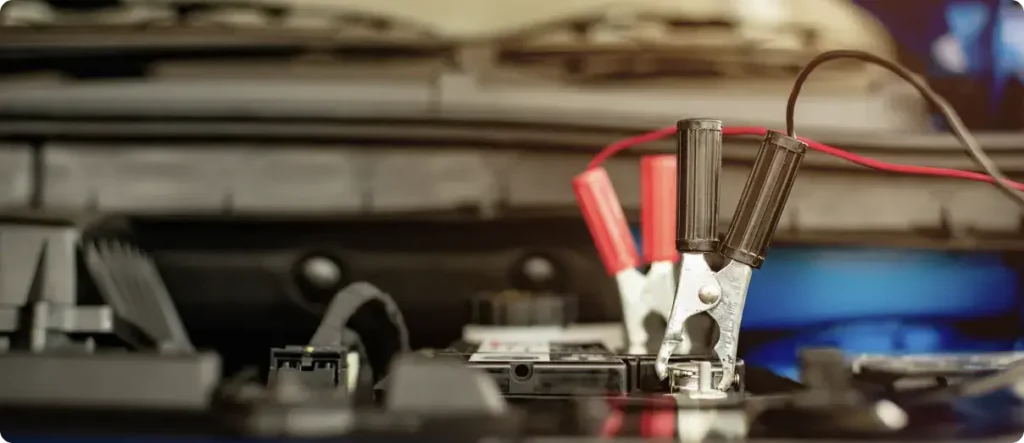
You don’t need a chemistry lecture to get this. Just think of milk in the fridge versus milk left on the counter. Cold keeps things stable; heat makes them break down fast. Inside your battery, heat speeds up the internal reactions, evaporates the electrolyte, and corrodes the plates and grids that store and release power. It also raises the rate of self-discharge, which invites sulfation, a buildup of crystals on the plates that slowly strangles the battery’s ability to hold a charge. The result is measurable. Citing AAA’s data, Consumer Reports notes that batteries in the coolest northern U.S. regions can last around 58 months, while in the hottest southern regions that figure drops below 41 months. That’s a difference of well over a year, purely from climate.
Humidity, Salt Air, and Battery Terminal Corrosion on Oahu
Heat isn’t the whole story on an island. Living near the ocean means our air carries moisture and salt, and both are hard on metal. Battery terminals corrode when gases vented by the battery react with the metal connectors, and Hawaii’s salty, humid air speeds that reaction up. The result is the crusty white, blue, or greenish powder you sometimes see building up around the posts. It isn’t literally rust, but it behaves like it, acting as a roadblock between your battery and the rest of the car. Even a healthy battery can act “dead” if that buildup gets bad enough, which is one reason electrical gremlins are so common here and why our electrical repair services stay busy year-round.
How to spot corrosion before it strands you
You can check for trouble in under a minute, without removing anything. Pop the hood and look for:
- White, blue, or green powdery buildup around the battery posts or cable clamps
- A dusting of fine, ashy residue on top of the battery case
- Cables that look swollen, frayed, or crusty where they meet the terminals
- A faint rotten-egg smell near the battery, which can signal a leaking, overheating unit
Warning Signs Your Battery Is Struggling in the Heat
Your battery usually whispers before it shouts. Watch for these signals:
- Slow engine crank – the starter turns over lazily, like the engine just woke up from a nap.
- Dim headlights or dashboard lights, especially at idle or when you first start up.
- Clicking sound when you turn the key, instead of a clean start.
- Electrical quirks – flickering interior lights, a radio that resets, or power windows moving slowly.
- A battery over three years old, which in our climate is already well into middle age.
- A swollen or misshapen battery case, a classic sign of heat damage.
Here’s the myth we most want to bust: many drivers believe only winter cold “kills” batteries. In reality, summer heat is harder on a battery than winter chill, and the situation where your car won’t start after sitting in the heat is extremely common on Oahu. Heat can trigger a sudden failure with almost no warning, because the damage builds up invisibly on the inside until the day it simply can’t deliver enough power. If your car cranks fine one morning and is completely silent the next, our vehicle no-start diagnostic is designed to pinpoint exactly why.
How Long Should a Car Battery Really Last in Hawaii?
Let’s set realistic expectations. On the mainland, drivers often quote four to five years. In a hot, humid place like Hawaii, three to four years is a much more honest range, and some batteries call it quits even sooner. The idea that a battery “should” last a fixed number of years no matter where you live simply doesn’t hold up. So if you’re past the three-year mark, don’t wait for a breakdown to think about hot weather battery replacement. Planning ahead is far cheaper and less stressful than a tow truck on the H-1.
When it is time to replace, it pays to buy for the climate. Absorbed glass mat (AGM) batteries tend to tolerate heat better than other sealed types, and that some flooded batteries come in “South” versions built with a higher electrolyte-to-lead ratio to hold up in the heat.
7 Ways to Extend Your Car Battery’s Life on Oahu
The good news? A few simple habits go a long way. Treat your battery a little kindly and it’ll return the favor:
- Park in the shade whenever you can. Think of shade as sunscreen for your engine bay; a covered stall or a tree does real work against heat.
- Keep the terminals clean. Wipe away any powdery buildup so power can flow freely; a clean connection is a happy connection.
- Check the voltage now and then. A quick test tells you if the battery is holding a healthy charge before it lets you down. Fully charged, it should read about 12.6 volts or higher; noticeably lower means it’s struggling.
- Avoid lots of short trips. Quick hops to the store don’t give the battery time to fully recharge, so mix in some longer drives.
- Keep the battery snug and securely mounted. Vibration from driving, combined with heat, breaks a battery down faster, and loose connections cause those maddening intermittent problems.
- Keep up with regular maintenance. Our Hawaii car maintenance checklist helps you catch small issues before they strand you.
- Don’t ignore charging clues. If lights dim or the battery keeps dying, the alternator may be the real problem; learn the signs of a failing alternator so you fix the right part the first time.
When to Get a Professional Battery Test in Waipahu
Here’s something the auto parts store won’t always tell you: a quick counter check or a cheap home tester often reads a struggling battery as “fine.” Those simple tests measure voltage at rest, but they don’t reveal how the battery performs under real strain. A professional load test does. It puts the battery under demand and shows whether it can actually deliver when your engine needs it most. Consumer Reports recommends having your battery load tested every year once it’s more than two years old. So if you’ve noticed any of the warning signs above, or you just want peace of mind before the hottest stretch of summer, a proper battery test on Oahu is the smart move.
At Top Level Cars in Waipahu, our load testing takes the guesswork out of it, and it pairs perfectly with our no-start diagnostic if your car has already left you stranded. We’re also proud to offer a 10% labor discount for military service members. Don’t gamble on a battery that’s living on borrowed island time. Book your appointment today and drive off knowing you’re covered.

Frequently Asked Questions About Car Battery Performance
Why does my car battery die so fast in Hawaii?
Our year-round heat and humidity never give the battery a cool “off season” to recover. That constant warmth speeds up internal wear and evaporation, so batteries here often last a year or more less than they would on the mainland.
Can humidity damage a car battery even if it’s not that hot outside?
Yes. Moisture and salt air corrode the terminals and connections regardless of temperature, blocking the flow of power. A perfectly healthy battery can act dead if corrosion builds up on the posts.
How long do car batteries actually last in a hot, humid climate like Oahu?
Plan on roughly three to four years, sometimes less. The common “five years no matter what” figure is a myth, since warm climates measurably shorten battery life.
What does it mean when my battery terminals are corroded?
That white, blue, or green crust is a corrosion layer on the metal connectors, and it interrupts the connection between your battery and the car. It’s worth cleaning promptly, and worth having checked if it keeps coming back.
Is it normal for a car to not start after sitting in the heat all day?
It’s common on Oahu, but it’s not something to ignore. Heat can cause a sudden battery failure with little warning, so a no-start after a hot day is a strong signal to have your battery and charging system tested.
Testimonials
What Drivers Are Saying About Top Level Cars
Read what our satisfied customers have to say about our services.
Great experience. I brought my Prius in for a diagnostic on a dash board error light. Plus I knew that the rear bearings needed to be replaced. Their attentive behavior was immediate as I scheduled my Monday morning shop visit and the owner responded on a Sunday to schedule. Even though there was a diagnostic fee the amount was applied to the repair. In and out in the time committed on the estimate. Clean, very clean facilities from to the waiting room and throughout the shop. I will continue to use them for future Maintinance and repair’s.
Robert G.
I recently had my Honda serviced at Top Level Cars, and I couldn't be more pleased with the experience. From the moment I walked in, the staff was incredibly welcoming and professional. They took the time to listen to my concerns and provided a detailed explanation of the necessary repairs. The quality of the work was outstanding. My Honda now runs smoother than ever, and I have complete confidence in the repairs they performed. The technicians clearly know their craft, and their attention to detail was evident in the final result. What stood out the most was the transparency throughout the entire process. I was kept informed of the progress and costs at every step, ensuring there were no surprises when it came time to settle the bill. The prices were fair and competitive, especially considering the high level of service provided. Overall, Top Level Cars exceeded my expectations. I highly recommend them to anyone in need of reliable and trustworthy auto service. I will definitely be returning for all my future car maintenance and repair needs.
Denis G.
First impressions: EXCELLENT! We have a Mercedes ML430 that needs some work on. Nick responded immediately and gave us a fair price, the best one we could find on the island. After checking, he recommended only one of the four repairs that others pushed for, and even that with no hurry whatsoever. In fact we felt so well treated by him that we didn’t mind doing his recommended work on our first visit, because we want the good service at TopLevel Cars recognized and paid for. We will definitely return!
Mark M.
If you have car trouble go to Top Level Cars and ask for Demetri! The service was incredible and the cost is the BEST on the island. He was able to take my car in and have it done the same day! He is super knowledgeable and was patient when explaining the work my car needed. I will 100% be bringing my car back for any future services.
Jennifer M.
Top Level Cars are true professionals when it comes to auto repair. I have a Mercedes CL550 that needed servicing. They took me in right away and did an excellent job. I recommend Top Level Cars to anyone who values outstanding service and fair prices. I will only trust Top Level Cars with my car repairs.
Gus N.
The Customer Service here is top notch! Shout out to a great team!! They were the first ones to get back to me and help me with my Tire issue. I have secured my appointment and will be back to have more services done.
Kristina J.
Top Level Cars provided an outstanding experience from start to finish. Their pricing was fair and transparent, exactly as advertised with no surprises. Communication was exceptional; they promptly answered all my questions and kept me informed throughout the process. The service was incredibly fast—I was in and out in no time. They made the entire process smooth and hassle-free. I highly recommend Top Level Cars to anyone looking for a reliable and trustworthy auto repair shop.
Shandrea H.