Auto Repair in Waipahu: The Oahu Driver’s Guide to Smarter Car Care
Top Level Cars
9 min read
You usually hear it first. A soft clunk on the way home through Pearl City when you hit the dip by the on-ramp, gone by the time you park in Waipahu. The car drives fine, so you tell yourself you will deal with it later. A week passes. The clunk picks up a friend, a faint squeal at the light. Still fine. Then one humid afternoon the A/C blows warm, and “later” seems to arrive all at once.
Almost every expensive repair on Oahu starts this quietly. Salt in the air, months of heavy humidity, and roads patched over older roads wear a car harder than most mainland advice assumes, and the island has a way of turning a small, ignorable noise into a real bill. The upside is that cars rarely fail without warning. If you learn to read what yours is telling you, and you have a shop that understands island driving, most of those small problems stay small.
Start With the Warning Signs Your Car Is Giving You
Your car tells you when something is wrong through four channels: what you hear, what you feel, what you smell, and what you see on the dashboard. Learning to read them is the single most useful skill for keeping repair bills small.
Hear: A squeal when braking usually means worn brake pads. A grinding noise often means metal on metal, which is more urgent. A clunk over bumps points to suspension wear, and a click when turning points to an axle or CV joint.
Feel:Pulling to one side suggests alignment, tire, or brake trouble. A vibration through the wheel points to tires, suspension, or brakes. A ride that suddenly feels rough usually means worn shocks, struts, or bushings.
Smell: A burning smell can come from overheating brakes, leaking fluid on a hot surface, or an electrical fault. A sweet smell often means a coolant leak.
See: Puddles under the car, and any dashboard warning light. A steady light is a “check it soon” signal. A flashing light, especially with rough running, is a “stop driving” signal.
Quick reference: how urgent is it?
Symptom
Likely cause
How urgent
Grinding when braking
Brake pads worn to metal
Today. Braking is a safety system.
Overheating gauge or steam
Coolant leak, failing pump or thermostat
Today. Heat can destroy an engine fast.
Flashing check engine light
Misfire or emissions fault in progress
Today. Keep driving and you risk the catalytic converter.
Steady check engine light, car drives fine
Wide range, from a loose gas cap to a sensor
This week. Get it scanned before guessing.
Pulling, vibration, weak A/C, clunks over bumps
Alignment, tires, suspension, or A/C wear
Schedule soon, before it worsens or spreads.
A new sound or smell that repeats
Early-stage wear
Monitor, and mention it at your next visit.
If the check engine light is your concern, start with a proper scan and some context rather than a parts swap. This plain-language guide on why your check engine light may be on is a good place to begin.
What Oahu Conditions Do to Your Car and Your Auto Repair Costs
Island driving is hard on the parts you never see. Three forces do most of the damage.
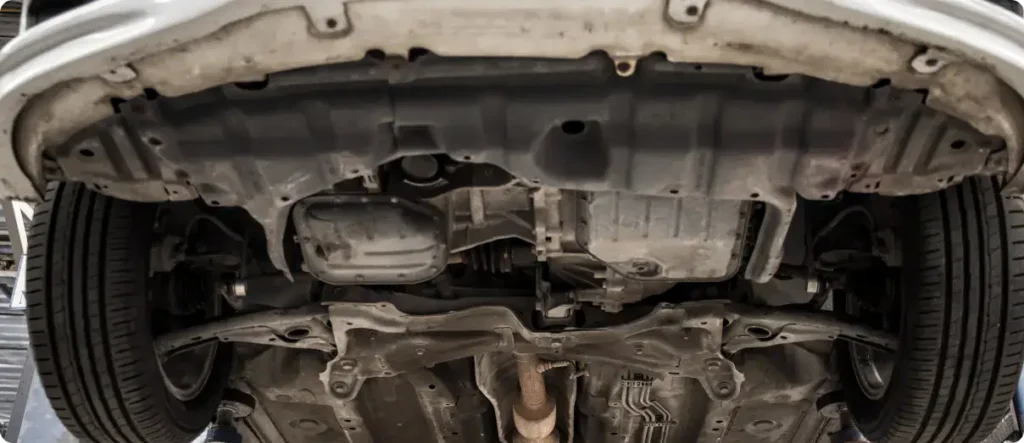
Salt: Coastal air accelerates corrosion on brake lines, fasteners, suspension components, and underbody hardware. If you live or park near the water, an undercar inspection matters far more than it would on the mainland, and a regular wash that rinses salt off the underbody genuinely extends the life of those parts.
Humidity: Honolulu’s relative humidity typically runs in the 60 to 76 percent range across the year. That moisture is tough on air conditioning systems, where it encourages musty smells and weak cooling, and it is why A/C deserves a check before performance drops rather than after.
Roads: Potholes and standing water punish tires, bushings, ball joints, and alignment. If your steering feels off, worn tires are often part of the story.
None of this ruins a car overnight. It simply shortens the window you have to catch problems before they spread, which is the real argument for staying ahead of maintenance on Oahu.
Common Auto Repair Services and What They Cost
A few numbers explain why repair budgets feel tight everywhere. Vehicle maintenance and repair costs rose about 6.5 percent in 2023, according to ConsumerAffairs, the national average repair bill is now around $838 in Cox Automotive data (as reported by CBS News), and the typical vehicle on U.S. roads is roughly 12.8 years old (S&P Global Mobility, 2025). Older cars need more attention, and parts and labor keep climbing, so catching problems early is now the main way to control what you spend.
Here is what the most common auto repair services actually involve.
Best for warning lights and no-obvious-cause faults
Prices vary widely by vehicle and by the specific fault, so the most useful thing a shop can give you is not a number over the phone but a written estimate after an inspection. A reputable estimate separates diagnosis from repair, lists parts and labor, and explains what is urgent versus what can wait.
A Preventative Maintenance Schedule for Oahu Drivers
Routine maintenance is cheaper than emergency repair, and it gives you the chance to fix wear before it affects safety. One outdated habit is worth dropping: the 3,000-mile oil change. Most modern engines running synthetic oil can safely go 7,500 to 10,000 miles, and the smarter approach is to follow the vehicle’s oil-life monitor and your actual driving conditions, as Consumer Reports notes.
A wash counts as maintenance too. Rinsing salt and grime off the body and underbody slows the corrosion that quietly claims CV boots, brake lines, and panels.
Dealership vs. Independent Auto Repair Shop
For routine work and most repairs, a good independent shop gives you clearer communication and more flexibility than a dealership, especially when a problem needs to be diagnosed before anything is replaced. European and American vehicles do have their own quirks, so the real question is not “dealer or independent” but whether the shop has the right diagnostic tools and experience for your make.
That matters most with drivability problems, recurring warning lights, and internal engine concerns. A shop that handles engine repair and diagnostics can trace a fault to its root cause instead of replacing parts on a hunch, which usually saves both time and money.
How to Find a Trustworthy Auto Repair Shop Near You
When you search for “auto repair near me” or the nearest auto repair shop, the name at the top of the results is only a starting point. What actually matters is whether the shop helps you make a clear decision. Use this checklist:
Plain-language explanations. You should leave understanding what failed, why, and whether it needs attention now.
Written estimates before work starts. Pricing up front, not after the fact.
Experience with your make. European and American vehicles often need model-specific tools and knowledge.
Patience with questions. Impatience with basic questions is a red flag.
A full range of services. One shop that handles diagnostics, brakes, A/C, suspension, and electrical work is easier to rely on over time.
Local knowledge. A shop that understands Hawaii-specific wear, from salt corrosion to pothole damage, will inspect for the right things.
What to Expect at Top Level Cars
Picture the actual visit. You pull in, tell the technician what you have been noticing, whether that is the clunk, the warm A/C, or the light that came on, and hand over the keys. Rather than reaching for parts, the shop starts with the symptom you described and works back to what is really causing it. You leave knowing what is wrong, what the fix involves, and what can safely wait, and only then do you decide how to proceed.
That sequence is the whole point. Diagnosing before replacing is what separates a bill for parts you never needed from a repair that actually solves the problem, and on Oahu, where trouble tends to build slowly, an early honest look is what keeps a small issue from turning into a big one.
So if your car has been trying to tell you something, do not wait for “later” to arrive all at once. Bring it to Top Level Cars, describe what you are hearing and feeling, and get a straight answer before a single part comes off.
Frequently Asked Questions About Auto Repair
Should I keep driving if my car makes noise but still runs?
It depends on the noise. Brake grinding, overheating, or strong vibration should be checked right away, because they can turn unsafe quickly. A mild, one-time sound is worth watching, but anything that repeats or grows louder is a signal to book an inspection.
Is weak A/C a small problem or a real repair?
On Oahu, weak A/C tends to get worse fast. It can point to a refrigerant leak, a struggling compressor, or moisture-related issues, all of which are cheaper to address early than after the system fails in peak heat.
Can suspension problems wait?
Mild symptoms can sometimes wait briefly, but clunks, pulling, and rough handling should be inspected before they damage tires or affect control. On rough island roads, worn suspension parts degrade faster than most drivers expect.
Is an independent shop fine for European and American vehicles?
Yes, as long as the shop has the right diagnostic tools, process, and experience for your make. Accurate diagnosis and clear communication matter far more than the size of the shop.
How often should I really change my oil?
Follow your owner’s manual and the oil-life monitor. For most modern vehicles on synthetic oil, that means every 7,500 to 10,000 miles rather than every 3,000, though heat, towing, and lots of short trips can shorten the interval.
Read what our satisfied customers have to say about our services.
Great experience. I brought my Prius in for a diagnostic on a dash board error light. Plus I knew that the rear bearings needed to be replaced.
Their attentive behavior was immediate as I scheduled my Monday morning shop visit and the owner responded on a Sunday to schedule.
Even though there was a diagnostic fee the amount was applied to the repair.
In and out in the time committed on the estimate. Clean, very clean facilities from to the waiting room and throughout the shop.
I will continue to use them for future Maintinance and repair’s.
Robert G.
I recently had my Honda serviced at Top Level Cars, and I couldn't be more pleased with the experience. From the moment I walked in, the staff was incredibly welcoming and professional. They took the time to listen to my concerns and provided a detailed explanation of the necessary repairs.
The quality of the work was outstanding. My Honda now runs smoother than ever, and I have complete confidence in the repairs they performed. The technicians clearly know their craft, and their attention to detail was evident in the final result.
What stood out the most was the transparency throughout the entire process. I was kept informed of the progress and costs at every step, ensuring there were no surprises when it came time to settle the bill. The prices were fair and competitive, especially considering the high level of service provided.
Overall, Top Level Cars exceeded my expectations. I highly recommend them to anyone in need of reliable and trustworthy auto service. I will definitely be returning for all my future car maintenance and repair needs.
Denis G.
First impressions: EXCELLENT! We have a Mercedes ML430 that needs some work on. Nick responded immediately and gave us a fair price, the best one we could find on the island. After checking, he recommended only one of the four repairs that others pushed for, and even that with no hurry whatsoever. In fact we felt so well treated by him that we didn’t mind doing his recommended work on our first visit, because we want the good service at TopLevel Cars recognized and paid for. We will definitely return!
Mark M.
If you have car trouble go to Top Level Cars and ask for Demetri! The service was incredible and the cost is the BEST on the island. He was able to take my car in and have it done the same day! He is super knowledgeable and was patient when explaining the work my car needed. I will 100% be bringing my car back for any future services.
Jennifer M.
Top Level Cars are true professionals when it comes to auto repair. I have a Mercedes CL550 that needed servicing. They took me in right away and did an excellent job. I recommend Top Level Cars to anyone who values outstanding service and fair prices. I will only trust Top Level Cars with my car repairs.
Gus N.
The Customer Service here is top notch! Shout out to a great team!! They were the first ones to get back to me and help me with my Tire issue. I have secured my appointment and will be back to have more services done.
Kristina J.
Top Level Cars provided an outstanding experience from start to finish. Their pricing was fair and transparent, exactly as advertised with no surprises. Communication was exceptional; they promptly answered all my questions and kept me informed throughout the process. The service was incredibly fast—I was in and out in no time. They made the entire process smooth and hassle-free. I highly recommend Top Level Cars to anyone looking for a reliable and trustworthy auto repair shop.



 Tips
Tips