Blown Head Gasket Symptoms: 7 Signs You Shouldn’t Ignore
Top Level Cars
8 min read
It’s a scenario we see far too often: a driver heads home from Ala Moana with the temperature needle in the red and decides to “deal with it tomorrow.” By the time the car reaches our shop, a straightforward gasket job has turned into a warped or cracked cylinder head and a bill several times larger. That one decision, keep driving or pull over, is usually what separates a manageable fix from a ruined engine. The good news is that a failing head gasket almost always sends warning signs first. Learn to read them and you give yourself the one thing a hot engine never will: time.
What Counts as a Head Gasket Symptom (and How We Picked These 7)
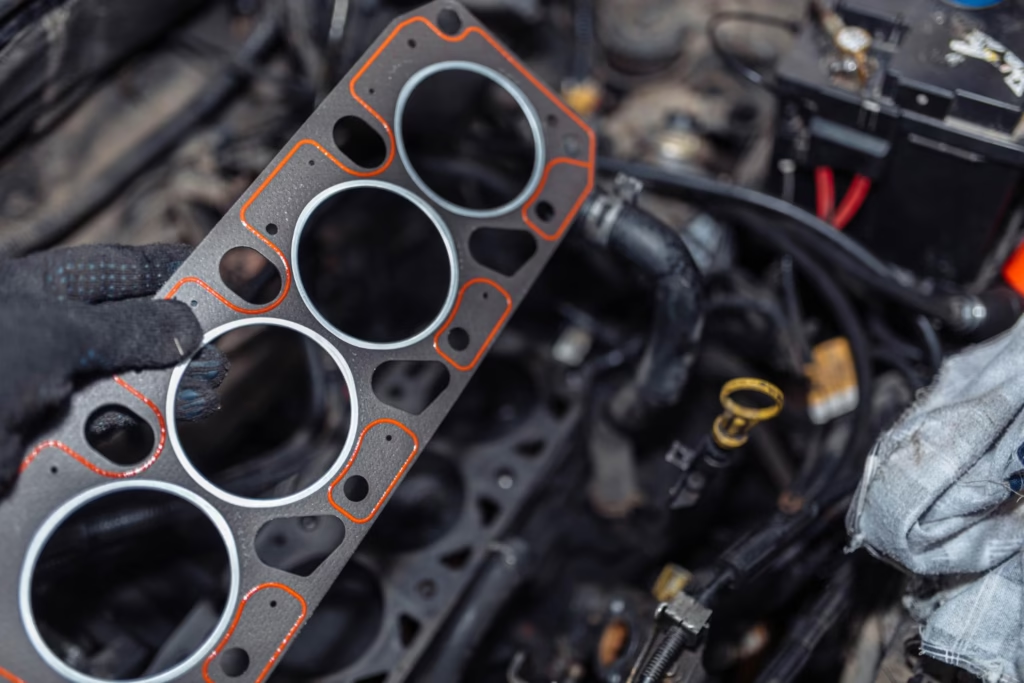
Your head gasket is a thin but hard-working seal sitting between the engine block and the cylinder head. It keeps apart three things that should never meet: combustion gases, engine oil, and coolant. When the gasket fails, those passages start leaking into one another, and the engine starts sending signals. The seven symptoms below run from the most obvious warnings down to the quiet ones that drivers tend to shrug off for weeks.
There’s a local angle worth knowing about, too. Hawaii’s heat and stop-and-go traffic make your engine’s cooling system work harder than typical mainland driving does, so a weakening gasket here tends to reveal itself sooner. Keep that in mind as you go through the signs below.
1. Persistent Overheating and a Climbing Temperature Gauge
The clearest early warning is a temperature gauge that keeps creeping toward hot, especially when you’re stuck in afternoon traffic on the H-1 or crawling through Kapolei at rush hour. A damaged gasket can push combustion gases into the cooling system, creating air pockets and forcing coolant out, so the engine can no longer shed heat the way it should, and the needle climbs. If it reaches the red, treat it as an emergency: pull over safely, shut the engine off, and don’t keep driving, because a few more miles at that temperature can warp the cylinder head for good.
Prevention is simple. The National Highway Traffic Safety Administration recommends checking your coolant level while the engine is cold and having the cooling system flushed on schedule.
Safety first: never open the radiator or reservoir cap on a hot engine. Pressurized coolant can spray out and cause serious burns.
2. Thick White Exhaust Smoke
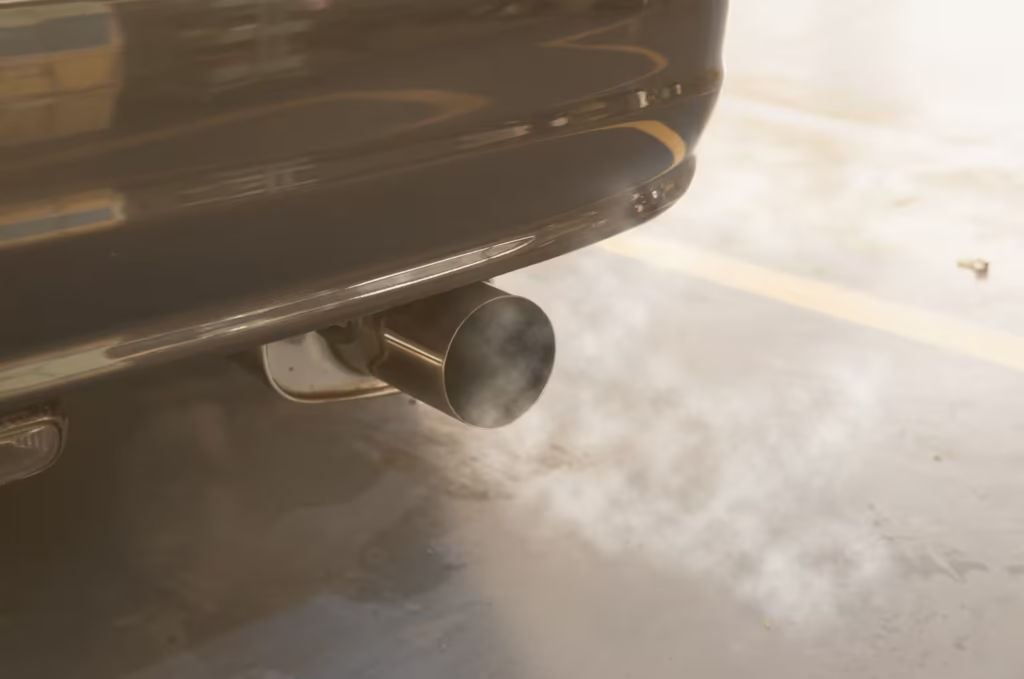
When coolant seeps past the gasket into the combustion chamber, it burns off as thick white smoke pouring from the tailpipe. It’s much denser than the thin vapor you might see right after a cold start, and it doesn’t fade once the engine warms up. On Oahu, high humidity can make harmless condensation look more dramatic, so it helps to know what different exhaust smoke colors say about your engine before jumping to conclusions. If the white cloud keeps billowing after the engine reaches operating temperature, coolant is the most likely culprit.
Sign #3: A Sweet Smell From the Exhaust
White smoke often comes with a companion: a sweet, syrupy smell from the tailpipe. That’s the smell of burning coolant. You may also catch it under the hood if coolant is escaping onto hot engine parts, although in that case a leaking hose or radiator is the more common source. Either way, be careful if you have kids or pets at home. Most coolants are made with ethylene glycol, and the CDC’s Agency for Toxic Substances and Disease Registry warns that exposure to large amounts can damage the kidneys, nervous system, lungs, and heart, so wipe up any drips in the garage or driveway right away. If white smoke and a sweet smell show up together, stop driving and have the car checked.
Sign #4: Milky Oil on the Dipstick or Under the Oil Cap
Here’s where a two-minute check pays off. Pull the dipstick or remove the oil filler cap and take a close look. Healthy oil is amber when fresh and turns darker brown with use. A blown gasket leaves a milky, light-brown sludge, like coffee with far too much cream, where coolant has mixed into the oil. Oil mixed with coolant can’t protect the engine’s moving parts, so if you find it, park the car and get it inspected before the bearings take the damage.
Island tip: a thin layer of creamy residue under the oil cap on its own can come from condensation in cars that make lots of short trips in humid weather. Milky oil on the dipstick itself is the much stronger warning sign.
Sign #5: Bubbles in the Coolant Reservoir
With the engine warmed up and idling, look at the coolant overflow reservoir without opening it. A few bubbles right after a coolant top-up may simply be trapped air working its way out. Steady, continuous bubbling means something else: combustion gases are being forced into the cooling system through the failed gasket. You might also see the coolant level rise and spill out of the reservoir as pressure builds. Either of these is a reason to call a mechanic rather than keep checking at home.
Sign #6: Rough Idle or Engine Misfire
A rough, shaky idle or an outright misfire, often with the check engine light on, can mean coolant is leaking into a cylinder and spoiling combustion there. A telling detail is a misfire that’s worst right after a cold start and smooths out after a few minutes, because coolant has seeped into the cylinder overnight. Misfires have several other common causes, such as worn spark plugs or a failing ignition coil, so don’t assume the worst. Paired with the other signs on this list, though, a misfire points toward the gasket.
Sign #7: Coolant Disappearing With No Visible Leak
The last sign is the easiest one to miss. You keep topping up the coolant, yet there’s never a puddle under the car. Instead of dripping onto the driveway, the coolant is being burned inside the engine and leaving through the exhaust. If you do find drips under the car, an external coolant leak is the more likely explanation, and usually a simpler fix. Coolant loss with no trace is exactly why head gasket failures do so much damage: the problem stays out of sight until the engine overheats.
One Sign or Several? When to Call Top Level Cars in Waipahu
You don’t need to memorize all seven symptoms. A simple rule of thumb will tell you how urgent the situation is:
One symptom on its own: keep a close eye on it and book a diagnostic soon, before it gets worse. The exception is a temperature gauge in the red, which is a reason to stop driving on its own.
Two or more symptoms together: stop driving and call right away. Continuing on is how a repairable gasket turns into a replacement engine.
If you’re seeing steam, a creeping temperature needle, or coolant that keeps disappearing, don’t gamble on “tomorrow.” Our mechanics offer complete engine repair and diagnostics right here in Waipahu, and when the trouble starts on the coolant side, we also handle coolant leak repair. Give Top Level Cars a call, describe what you’re seeing, and let us catch the problem while it’s still just a gasket.
Head Gasket Questions Oahu Drivers Ask Us
How do I know if my head gasket is bad?
Watch for overheating, white exhaust smoke, a sweet smell from the tailpipe, milky oil, bubbling coolant, misfires, or coolant that disappears with no visible leak. Any two of these together strongly point to a failing gasket.
How can I test my head gasket?
A shop can run a combustion leak (block) test that detects exhaust gases in the coolant, along with a cooling system pressure test. A compression or leak-down test can then show which cylinder is affected. Together, these confirm the diagnosis before any teardown begins.
Can I drive a car with a blown head gasket?
It’s best not to. Even a short drive risks warping the cylinder head or seizing the engine, turning a moderate repair into a much bigger one. If the car has to be moved, towing is the safest option.
Is it worth fixing a head gasket?
Usually yes, if you catch the problem early and the rest of the engine is in good shape. The longer you wait, the more likely the damage spreads to the cylinder head and bearings, which can make the repair cost more than the car is worth.
What is the lifespan of a head gasket?
Many head gaskets last the life of the engine, well over 100,000 miles. Repeated overheating, skipped coolant service, and the extra heat load of stop-and-go traffic in Hawaii’s climate can shorten that considerably.
Which cars are prone to head gasket problems?
Older Subaru 2.5-liter boxer engines and some high-mileage four-cylinders with aluminum heads are well-known trouble spots. Still, any engine that has overheated repeatedly is at risk, regardless of make.
Read what our satisfied customers have to say about our services.
Great experience. I brought my Prius in for a diagnostic on a dash board error light. Plus I knew that the rear bearings needed to be replaced.
Their attentive behavior was immediate as I scheduled my Monday morning shop visit and the owner responded on a Sunday to schedule.
Even though there was a diagnostic fee the amount was applied to the repair.
In and out in the time committed on the estimate. Clean, very clean facilities from to the waiting room and throughout the shop.
I will continue to use them for future Maintinance and repair’s.
Robert G.
I recently had my Honda serviced at Top Level Cars, and I couldn't be more pleased with the experience. From the moment I walked in, the staff was incredibly welcoming and professional. They took the time to listen to my concerns and provided a detailed explanation of the necessary repairs.
The quality of the work was outstanding. My Honda now runs smoother than ever, and I have complete confidence in the repairs they performed. The technicians clearly know their craft, and their attention to detail was evident in the final result.
What stood out the most was the transparency throughout the entire process. I was kept informed of the progress and costs at every step, ensuring there were no surprises when it came time to settle the bill. The prices were fair and competitive, especially considering the high level of service provided.
Overall, Top Level Cars exceeded my expectations. I highly recommend them to anyone in need of reliable and trustworthy auto service. I will definitely be returning for all my future car maintenance and repair needs.
Denis G.
First impressions: EXCELLENT! We have a Mercedes ML430 that needs some work on. Nick responded immediately and gave us a fair price, the best one we could find on the island. After checking, he recommended only one of the four repairs that others pushed for, and even that with no hurry whatsoever. In fact we felt so well treated by him that we didn’t mind doing his recommended work on our first visit, because we want the good service at TopLevel Cars recognized and paid for. We will definitely return!
Mark M.
If you have car trouble go to Top Level Cars and ask for Demetri! The service was incredible and the cost is the BEST on the island. He was able to take my car in and have it done the same day! He is super knowledgeable and was patient when explaining the work my car needed. I will 100% be bringing my car back for any future services.
Jennifer M.
Top Level Cars are true professionals when it comes to auto repair. I have a Mercedes CL550 that needed servicing. They took me in right away and did an excellent job. I recommend Top Level Cars to anyone who values outstanding service and fair prices. I will only trust Top Level Cars with my car repairs.
Gus N.
The Customer Service here is top notch! Shout out to a great team!! They were the first ones to get back to me and help me with my Tire issue. I have secured my appointment and will be back to have more services done.
Kristina J.
Top Level Cars provided an outstanding experience from start to finish. Their pricing was fair and transparent, exactly as advertised with no surprises. Communication was exceptional; they promptly answered all my questions and kept me informed throughout the process. The service was incredibly fast—I was in and out in no time. They made the entire process smooth and hassle-free. I highly recommend Top Level Cars to anyone looking for a reliable and trustworthy auto repair shop.



 Engine