Ball Joint Replacement: What It Is, and When You Need It
Top Level Cars
10 min read
You hit a dip on Farrington Highway and hear it: a dull clunk from the front of the car, like someone tapped the floor with a hammer. Most drivers shrug it off as island roads being island roads. That sound is one of the most common early warnings of a worn ball joint, and it belongs to a part that is far cheaper to deal with today than after it fails. Ignore it long enough and you are looking at a tow, body damage, and a very bad afternoon. The good news: ball joints usually give you plenty of notice before they quit, if you know what to listen for.
What Is a Ball Joint?
A ball joint is a pivoting connector between the steering knuckle (the part that carries your wheel hub) and a suspension control arm. It lets the wheel steer left and right while the suspension moves up and down over bumps, both at the same time.
Think of it as your car’s hip joint: a hardened steel ball sitting inside a greased socket, sealed by a rubber boot that keeps grease in and water and grit out. Ball joints are engineered for a specific vehicle, so dimensions, load ratings and mounting style differ from model to model, and the right part is the one specified for your car. Once the ball has worn loose in its socket, no amount of tightening or greasing brings it back, and ball joint replacement becomes the only real fix.
Most vehicles have an upper and a lower ball joint on each front wheel, though the suspension design decides how the load is shared. On a double wishbone setup with the spring on the lower arm, the lower joint carries the weight of the car while the upper one mainly guides the steering angle. On MacPherson strut cars the strut carries the load and a single lower joint locates the knuckle, which is one reason those joints often last longer.
Signs You Need a Ball Joint Replacement
A bad ball joint rarely fails silently. Watch for:
Clunking or popping over bumps and speed humps
A squeak or creak when turning slowly, like a rusty gate
Loose, vague, or wandering steering
Vibration through the steering wheel at speed
Uneven, patchy wear on the front tires
A car that pulls to one side after an alignment “should” have fixed it
One symptom on its own can point elsewhere. Two or three together point strongly toward worn ball joints.
Noises: clunking, popping, and squeaking
The classic sound is a hollow thunk from one front corner when a wheel drops into a pothole, often repeating as the suspension rebounds. At low speed with the wheel turned, pulling into a parking stall at Waikele Center for example, you may hear clicking or popping instead. That noise comes from metal slack inside the socket: the ball rattling in a housing that has worn oval instead of round.
A dry squeak on slow turns is usually the same story one step earlier. The boot has cracked, the grease is gone, and metal rubs metal. Worn strut mounts and bushings can squeak in a similar way, so the source is worth confirming on a lift rather than guessing in the driveway. The same goes for clunks. A damaged CV axle makes its own distinct clicking pattern, which is why cracked axle symptoms are worth recognizing before you assume the worst.
Steering wheel play and handling changes
With a worn joint, the steering feels disconnected. You turn the wheel a little and nothing happens, then the car responds all at once. On the H-1 the car wanders, and you find yourself making constant small corrections just to hold your lane.
A quick reference check: with the engine running, the car parked and the front wheels straight, turn the steering wheel gently until a front wheel just begins to move. Federal standards for vehicles in use (49 CFR 570.7) allow roughly 2 inches of travel at the rim of a 16 inch steering wheel before the wheel responds. Noticeably more than that means something in the steering or suspension linkage is loose and needs inspecting. Shimmy or vibration through the wheel at highway speed belongs in the same category of warning.
Play in the joint lets the wheel drift out of its designed camber and toe, so the tire scrubs sideways instead of rolling straight. The usual results are wear concentrated on one shoulder of the tread, feathered edges you can feel by running a hand across the tire, and a set of tires that dies thousands of miles early. This is also why alignment belongs in the job: replacing the joint changes the geometry, so a toe and camber correction is part of doing the repair properly.
Why Ball Joints Wear Out Faster on Oahu
Living here is wonderful for people and hard on suspension parts. Salt carried on the trade winds settles on everything, and constant humidity keeps it working. That salty film corrodes the joint housing and, more importantly, attacks the rubber boot that holds the grease in. Once the boot cracks, road dust and rainwater get in, grease washes out, and wear accelerates fast. It is the same reason a garden hose left in the sun in Kapolei goes brittle and splits.
Then there are the roads. The patched, sunken stretches between Waipahu and Pearl City deliver thousands of small impacts a year, and every one of them lands like a hammer tap on that ball and socket. Cars that live near the coast in Ewa Beach often show cracked boots well before a mainland car of the same age and mileage. None of this makes your car fragile. It does mean the inspection interval that works in Arizona is too generous here, and a shop that works on island cars every day knows exactly where to look. That local pattern recognition is the backbone of our chassis and suspension services.
How Ball Joint Replacement Works
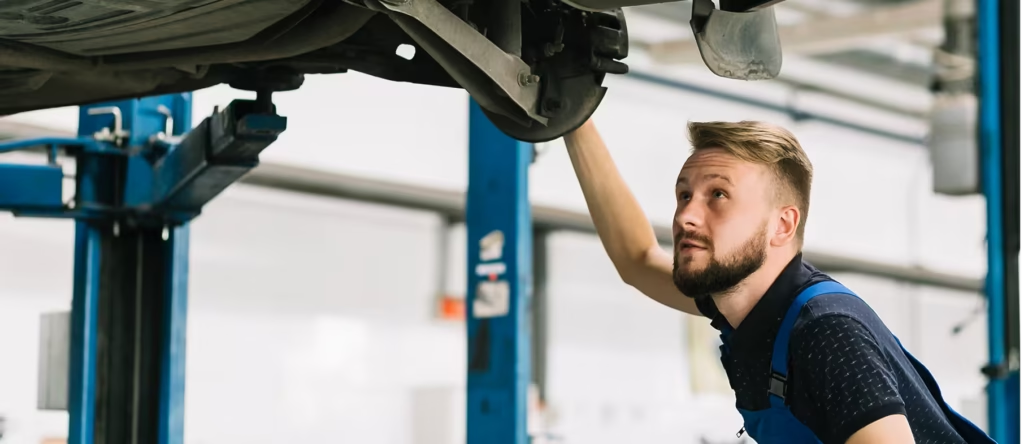
The job starts with confirmation, not guessing. A technician lifts the vehicle, unloads the suspension, and checks each joint for play with a pry bar or a dial indicator, ruling out tie rods, sway bar links and wheel bearings that mimic the same symptoms. Thorough car diagnostics at this stage is what keeps you from paying for a part that was never the problem.
From there the knuckle is separated, the old joint is pressed or unbolted out, the new one goes in at the correct torque, and the vehicle is realigned before it leaves the lot. A single corner usually takes a couple of hours, longer when corrosion has seized the hardware.
Upper vs. lower ball joint replacement
Where the suspension carries its load decides which joint suffers most. On vehicles whose lower joint bears the weight of the car, that joint absorbs the brunt of every pothole and typically wears out well before the upper one. If the lower joint is bad on one side, the other side is often not far behind, because both have traveled the same roads.
On many modern vehicles the ball joint comes riveted or pressed into the control arm as a single assembly and cannot be bought on its own. In those cases a control arm replacement is the correct repair, and it often saves labor compared with fighting a pressed joint out of an old arm whose bushings are worn anyway.
What affects the cost of the repair
Every vehicle prices differently, so we inspect and quote before we touch anything. These are the factors that move the number up or down:
Factor
Why it matters
Make and model
Design and parts availability vary widely, and some vehicles only offer the joint as part of a larger assembly
Bolt-in vs. pressed-in joint
A bolt-in joint comes out quickly; a pressed joint needs special tools and more labor time
One corner or both sides
Doing both sides together shares a single alignment and one round of labor
Condition of the hardware
Island corrosion can seize pinch bolts and studs, which adds time and sometimes new fasteners
Related parts found on inspection
Worn tie rods, bushings or sway bar links discovered at the same time change the scope of the work
Alignment
A wheel alignment follows every ball joint replacement, so it belongs in the total
We explain what is urgent and what can wait a few months, and we do not add work you did not need.
Is It Safe to Keep Driving With a Bad Ball Joint?
Here is the honest answer, without drama. A ball joint that has just started clunking will most likely survive your drive home this evening. Even so, a ball joint is one of the few parts whose complete failure separates the wheel from the suspension. When that happens, the wheel folds under the car, the vehicle drops onto the control arm, and steering control disappears in an instant, usually at whatever speed you happened to be traveling.
So no panic, and no procrastinating either. If you hear clunking, get it inspected within days rather than months, and avoid highway speeds until you know what you are dealing with.
When to Book a Suspension Inspection
Use these simple decision points:
Two or more symptoms from the list above: book now.
High mileage on the original front suspension, roughly 90,000 miles and up: have the joints checked at your next service.
A coastal-driven car past seven or eight years old: an annual suspension inspection is money well spent.
Any time you are due for a state inspection: loose steering components are a legitimate reason to fail your Hawaii safety check (PMVI), so catching it early saves a second trip.
If your car is telling you something over the bumps, let us take a look. Call or book an appointment at Top Level Cars in Waipahu, and you will get a straight diagnosis, a written quote before any work begins, and zero pressure to buy anything your car does not actually need.
Ball Joint Questions We Hear in the Shop
How long can I drive with a bad ball joint?
There is no safe mileage number. Some joints last months after the first clunk, others fail within weeks. Once you notice symptoms, treat it as a repair to schedule within days and keep highway driving to a minimum until it is inspected.
What does a failing ball joint sound like?
Most often a hollow clunk or thud from one front corner over bumps, sometimes with clicking or popping when turning at low speed. A dry squeak on slow turns points to a cracked boot and lost grease, which is the stage right before real wear sets in.
Can a bad ball joint cause a car to shake or pull to one side?
Yes. The excess play lets the wheel change angle under load, which shows up as steering wheel vibration at speed and a pull that keeps coming back even after an alignment.
What determines the cost of ball joint replacement?
Mainly your make and model, whether the joint bolts in or has to be pressed out, whether one side or both are done together, and how much corrosion has welded the hardware together. The alignment that follows the repair is part of the total as well. Ask for a written quote after the inspection so you know the whole picture before any work starts.
Do I need to replace both ball joints at the same time?
Not always, though it is usually worth it. Left and right joints wear at a similar rate, and doing both at once means one alignment and one round of labor instead of two.
Read what our satisfied customers have to say about our services.
Great experience. I brought my Prius in for a diagnostic on a dash board error light. Plus I knew that the rear bearings needed to be replaced.
Their attentive behavior was immediate as I scheduled my Monday morning shop visit and the owner responded on a Sunday to schedule.
Even though there was a diagnostic fee the amount was applied to the repair.
In and out in the time committed on the estimate. Clean, very clean facilities from to the waiting room and throughout the shop.
I will continue to use them for future Maintinance and repair’s.
Robert G.
I recently had my Honda serviced at Top Level Cars, and I couldn't be more pleased with the experience. From the moment I walked in, the staff was incredibly welcoming and professional. They took the time to listen to my concerns and provided a detailed explanation of the necessary repairs.
The quality of the work was outstanding. My Honda now runs smoother than ever, and I have complete confidence in the repairs they performed. The technicians clearly know their craft, and their attention to detail was evident in the final result.
What stood out the most was the transparency throughout the entire process. I was kept informed of the progress and costs at every step, ensuring there were no surprises when it came time to settle the bill. The prices were fair and competitive, especially considering the high level of service provided.
Overall, Top Level Cars exceeded my expectations. I highly recommend them to anyone in need of reliable and trustworthy auto service. I will definitely be returning for all my future car maintenance and repair needs.
Denis G.
First impressions: EXCELLENT! We have a Mercedes ML430 that needs some work on. Nick responded immediately and gave us a fair price, the best one we could find on the island. After checking, he recommended only one of the four repairs that others pushed for, and even that with no hurry whatsoever. In fact we felt so well treated by him that we didn’t mind doing his recommended work on our first visit, because we want the good service at TopLevel Cars recognized and paid for. We will definitely return!
Mark M.
If you have car trouble go to Top Level Cars and ask for Demetri! The service was incredible and the cost is the BEST on the island. He was able to take my car in and have it done the same day! He is super knowledgeable and was patient when explaining the work my car needed. I will 100% be bringing my car back for any future services.
Jennifer M.
Top Level Cars are true professionals when it comes to auto repair. I have a Mercedes CL550 that needed servicing. They took me in right away and did an excellent job. I recommend Top Level Cars to anyone who values outstanding service and fair prices. I will only trust Top Level Cars with my car repairs.
Gus N.
The Customer Service here is top notch! Shout out to a great team!! They were the first ones to get back to me and help me with my Tire issue. I have secured my appointment and will be back to have more services done.
Kristina J.
Top Level Cars provided an outstanding experience from start to finish. Their pricing was fair and transparent, exactly as advertised with no surprises. Communication was exceptional; they promptly answered all my questions and kept me informed throughout the process. The service was incredibly fast—I was in and out in no time. They made the entire process smooth and hassle-free. I highly recommend Top Level Cars to anyone looking for a reliable and trustworthy auto repair shop.



 Suspension & Steering